
Choosing the right engineering college begins with understanding the selection process. Students must prepare for competitive tests and meet institutional eligibility standards. Entrance Exams and Admission Requirements play a vital role in securing admission to Kongu Engineering College. A clear understanding of these procedures helps aspirants plan effectively and pursue their academic goals with confidence.
Understanding Engineering Entrance Exams in India
Engineering entrance examinations assess students’ aptitude, analytical skills, and subject knowledge.
If someone questioning or confusion on What are all the Entrance Exam Available for Engineering ?
These exams serve as gateways to reputed institutions. Preparing strategically enhances the chances of securing admission to top colleges like Kongu Engineering College.
Major Entrance Exams for Engineering Aspirants
Students aiming for engineering programs should be familiar with national and state-level examinations:
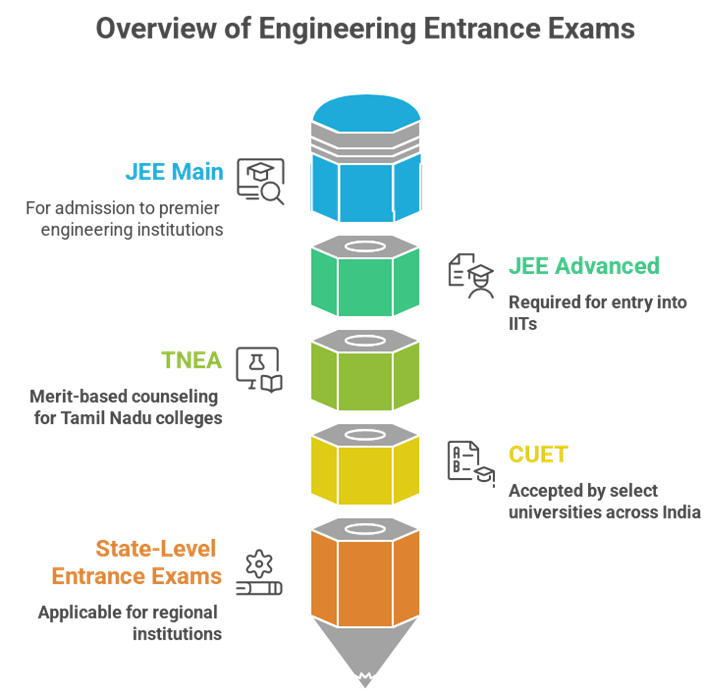
- JEE Main – Conducted for admission to premier engineering institutions.
- JEE Advanced – Required for entry into IITs.
- TNEA (Tamil Nadu Engineering Admissions) – Merit-based counseling for engineering colleges in Tamil Nadu.
- CUET – Accepted by select universities across India.
- State-Level Entrance Exams – Applicable for regional institutions.
Understanding these examinations strengthens preparation and aligns with the Entrance Exams and Admission Requirements for engineering education.
Subjects and Exam Pattern
Entrance exams typically evaluate students on core subjects studied in higher secondary education:
- Physics: Tests conceptual understanding and analytical ability.
- Chemistry: Assesses theoretical knowledge and application skills.
- Mathematics: Evaluates logical reasoning and problem-solving aptitude.
Most exams follow an objective format with multiple-choice questions. Time management and conceptual clarity play a crucial role in achieving high scores.
Eligibility Criteria for Entrance Exams
To appear for engineering entrance examinations, candidates must meet specific requirements:
- Completion of 10+2 with Physics, Chemistry, and Mathematics.
- Minimum qualifying marks as per regulatory norms.
- Compliance with age and nationality guidelines.
- Valid examination registration and documentation.
These criteria ensure fairness and transparency in the selection process.
Preparation Tips for Success in Entrance Exams
A disciplined approach enhances performance and confidence.
- Create a structured study timetable.
- Focus on NCERT and standard reference books.
- Practice mock tests and previous question papers.
- Strengthen conceptual understanding.
- Revise regularly and manage time effectively.
Strategic preparation improves exam readiness and increases admission prospects.
Admission Process After Succeed in Entrance
Engineering aspirants must qualify through merit-based evaluations such as national or state-level entrance systems. Candidates need strong academic records, valid documentation, and successful participation in counseling. Meeting eligibility standards and adhering to official procedures ensures a smooth admission process at Kongu Engineering College.
After qualifying through merit-based evaluation, students can apply through the appropriate counseling process. Understanding the Entrance Examshelps applicants navigate the admission stages efficiently.
Your Gateway to Engineering Excellence
Understanding Entrance Exams and Admission Requirements enables students to prepare strategically and secure admission with confidence. By focusing on competitive examinations and following a structured admission process, aspirants can build a strong academic foundation. Kongu Engineering College offers the ideal environment for innovation, learning, and career success.
“Prepare for success – Qualify through the entrance process and secure your future at Kongu Engineering College today”