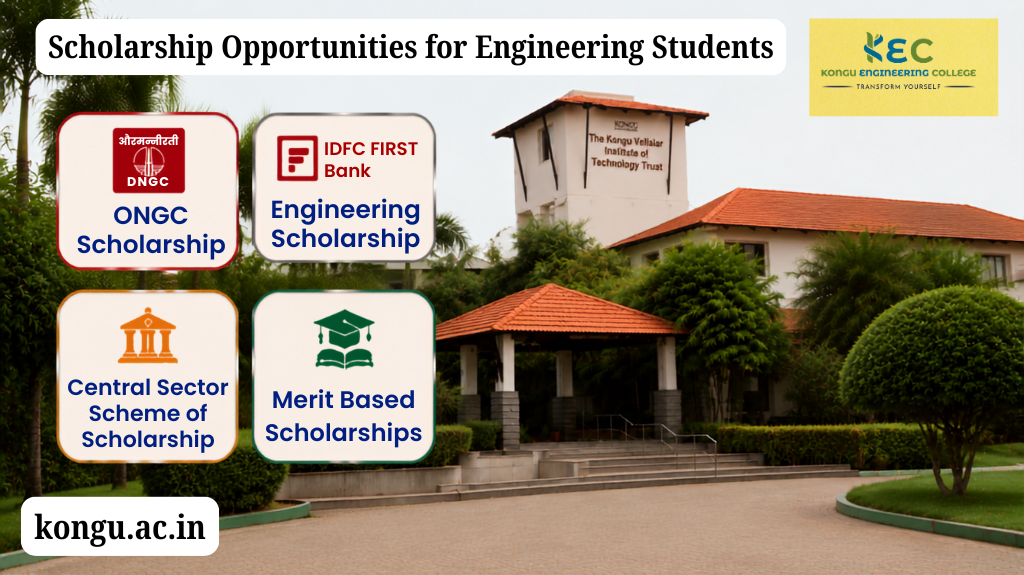
Most families spend months researching which engineering college to join, but far fewer spend the same time exploring scholarships for engineering students once they’ve joined. That’s where real money gets left on the table, and at KEC, that support system goes deeper than most colleges in Tamil Nadu. National Scholarships For Female Engineering Students Government and Corporate Scholarships Merit Based Scholarships Most government scholarship for engineering students can be applied for through the National Scholarship Portal, a single platform covering central and state schemes. Students are encouraged to register early, since many schemes have limited application windows. To understand how institutional scholarships and fee concessions work alongside these schemes, read Fees and Scholarships in Engineering College: What Many Parents and Students Don’t Know?. Scholarships for Engineering Students at KEC Academic Excellence Scholarship Benefit Top 5% CGPA 50% tuition fee waiver + Rs 20,000 cash award Top 5 Students per Department Additional annual recognition Government and Community Scholarships Scholarship Benefit BC and MBC Scholarship Rs 7,000 to Rs 8,500 per year (family income below Rs 2 lakh) SC and ST Post Matric Scholarship Up to Rs 55,000 per year First Generation Graduate Waiver Approx. Rs 25,000 tuition fee reduction Government School Students Scholarship Additional fee concession 7.5 Reservation Scheme Full fee waiver for eligible students Sports Quota Fee concession for state/national level achievers National Schemes Facilitated by KEC Private Trusts and Corporate Scholarships for Engineering Students Between these institutional, government, and private options, free scholarships for students are far more accessible at KEC than most families realise. The KVIT Trust Advantage Kongu Engineering College is part of the KVIT Trust, founded in 1983 by philanthropists from the Kongu Vellalar Gounder community to promote technical education in the region. More Than a Governing BodyThe KVIT Trust actively funds scholarships, endowments, and recognition programs for high achieving students across every institution under its umbrella, support that goes beyond what most engineering colleges in Tamil Nadu offer. How to Make Sure You Are Not Missing Out? Scholarships are available at many levels, making scholarships for engineering students easier to access than many families think. The biggest challenge is often knowing where to look. Families who explore these opportunities early have a better chance of receiving support. If you’re still comparing colleges, it’s worth looking beyond scholarships alone. Academics, placements, campus facilities, and student support all contribute to a better learning experience. Learn more in our detailed guide on Still Searching for the Best Engineering College in Tamil Nadu? At KEC, help goes beyond fee waivers, backed by a Trust that has supported students for over four decades. All that’s left is to apply.
How I Choose the Best College for CSE in Tamil Nadu?
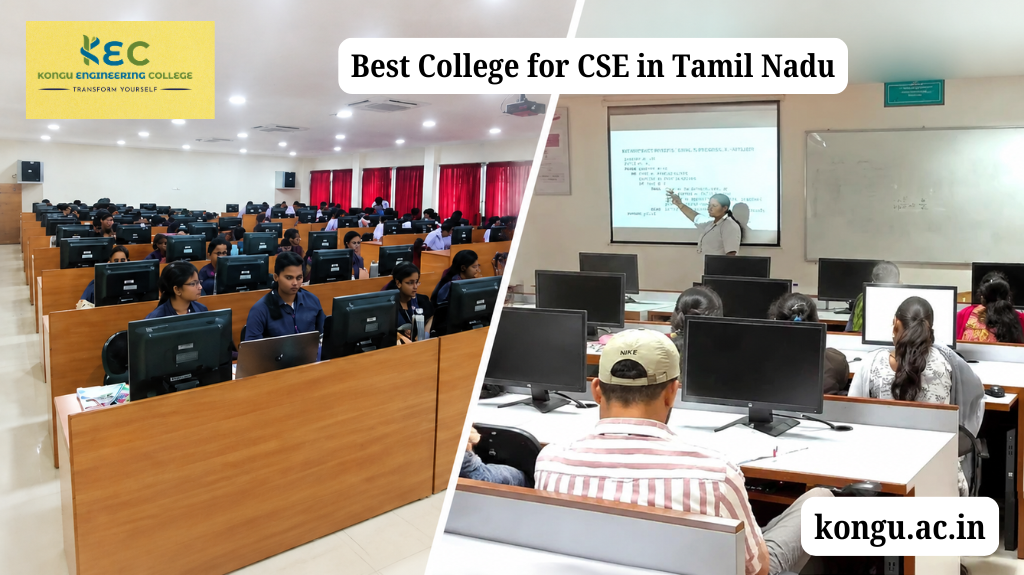
Everyone wanted CSE. I was no different. But picking the wrong college could cost four years. Finding the best college for CSE in Tamil Nadu was the only thing that mattered before locking my TNEA preference. Here is everything that helped me decide. What Makes a CSE College Worth Choosing? Not every CSE college gives you the same future. I learned that the hard way. If you are still comparing options, read this guide on finding the best engineering college in Tamil Nadu before you go further. What I Check Before Deciding? What the Cutoff Rank Actually Tells You? A high CSE cutoff means more students want that seat. But high demand does not always mean high quality. I checked placement data alongside the cutoff rank every time. If you are serious about finding the best college for CSE in Tamil Nadu, start with placement records, not just cutoff numbers. Before finalising your list, also check this complete guide on how to use TNEA counselling to choose the right engineering college. Top CSE College in Erode Shortlisting every engineering college offering CSE in Erode revealed a clear pattern. CSE Department in KEC A visit here tells you everything brochures cannot. It felt different from the moment I walked in. Inside the CSE Department Placement Numbers That Proved Best College for CSE in Tamil Nadu These numbers were not on a brochure. They were verified directly. Why I Put KEC as My First Choice? I was looking for the best college for CSE in Tamil Nadu. KEC checked every single box. My CSE journey started at KEC Come visit KEC at Thoppupalayam, Perundurai, Erode. See the CSE department in KEC before you lock your final TNEA choice. Because choosing the best college for CSE in Tamil Nadu is the one decision that shapes everything that comes after. For students interested in the latest research happening in the CSE field, explore recent publications on Computer Science and Engineering at ResearchGate.

TNEA counselling 2026 to choose the right engineering college
Your rank is out and the clock is ticking. Every college looks the same on paper and every person around you has a different answer. TNEA Counselling 2026 is not just about getting a seat. It is about getting the right one. Everything you need to choose the right engineering college with clarity and zero regret starts here. How Does It Work and What Should You Know? TNEA is the centralized admission process conducted by Anna University for engineering colleges across Tamil Nadu. Your rank is based on Class 12 marks. You register, fill college preferences, and seats are allotted based on rank and category. Counselling Process: Key Things to Remember These small steps make a big difference when counselling begins. Getting these basics right puts you ahead of most students before the process even starts. For a detailed step by step breakdown read our guide on the Counselling Process for Engineering Colleges. Before You Fill Your TNEA Counselling 2026 Preferences, Read This Most students choose a college based on its name alone. Here are the TNEA college selection tips that actually make a difference: 5 Things That Actually Matter Check NAAC and NBA accreditation status first Look at average salary not just the highest package Visit the campus before making a final decision Talk to current students or alumni for honest feedback Select the appropriate branch before the college The right college decision is not made in a day and it should never be made on impulse. Take your time, ask the right questions, and choose a college that will genuinely support your growth every single year. How to Choose Engineering College in Tamil Nadu? Before TNEA Counselling 2026 begins, asking the right questions is what separates a confident choice from a regretful one. Use previous year cutoff marks published by Anna University to identify which colleges are realistic for your rank. Why Should KEC Be on Your List? KEC delivers on every factor that matters when it counts the most. Accreditation, placements, faculty, facilities, industry connections. It checks every box. Every detail has been thought through so you can walk in confident and walk out successfully. Come visit KEC at Thoppupalayam, Perundurai, Erode and see for yourself why thousands of students make this their first choice every TNEA Counselling 2026 season. Still unsure which engineering college is the right fit? Read our guide on Still Searching for the Best Engineering College in Tamil Nadu? to compare the factors that matter before making your final TNEA Counselling 2026 decision. Source: Tamil Nadu Engineering Admissions 2026 (TNEA 2026)
Still Searching for the Best Engineering College in Tamil Nadu?
1. TNEA Counselling 2026 to Choose the Right College One wrong choice during TNEA can impact your academic journey for years. Learn the key factors students should evaluate before locking their choice. 2. Best College for CSE in Tamil Nadu: What to Check During TNEA Counselling? Every college claims to offer the best opportunities. Discover the factors that truly matter before choosing a Computer Science program. 3. NIRF Rankings 2026: What Students Must Know? College rankings influence thousands of admission decisions every year. Understand what NIRF measures and how rankings should be interpreted. 4. Top Research College in Erode: Why KEC Stands Out? Research opportunities, innovation culture, and academic excellence play a major role in student success. Discover what makes KEC a preferred choice. 5. Future Scope of CSE in Tamil Nadu: What KEC CSE Graduates Are Doing Today? CSE opens more doors than any other branch. See how KEC prepares students for real industry roles and what its graduates are achieving right now. 6. What Makes KEC a Top Placement College in Erode? Placement numbers only tell half the story. Discover what KEC does differently to help students land the right opportunities every year. 7. Fees and Scholarships in Engineering College: Parents and Students Should Check Before Joining Understanding fee structures, scholarship opportunities, and financial assistance programs can help families make informed decisions. 8. Engineering Scholarships in Tamil Nadu: Are You Missing Out on Free Support Many students qualify for scholarships but never apply. Find out which scholarships are available and how to claim them before joining. Source 1. Tamil Nadu Engineering Admissions 2026 (TNEA 2026) 2. National Institutional Ranking Framework Also Read Next: Curious about KEC’s official recognitions? Check out AICTE Approved College in Erode: Everything Students Need to Know About KEC
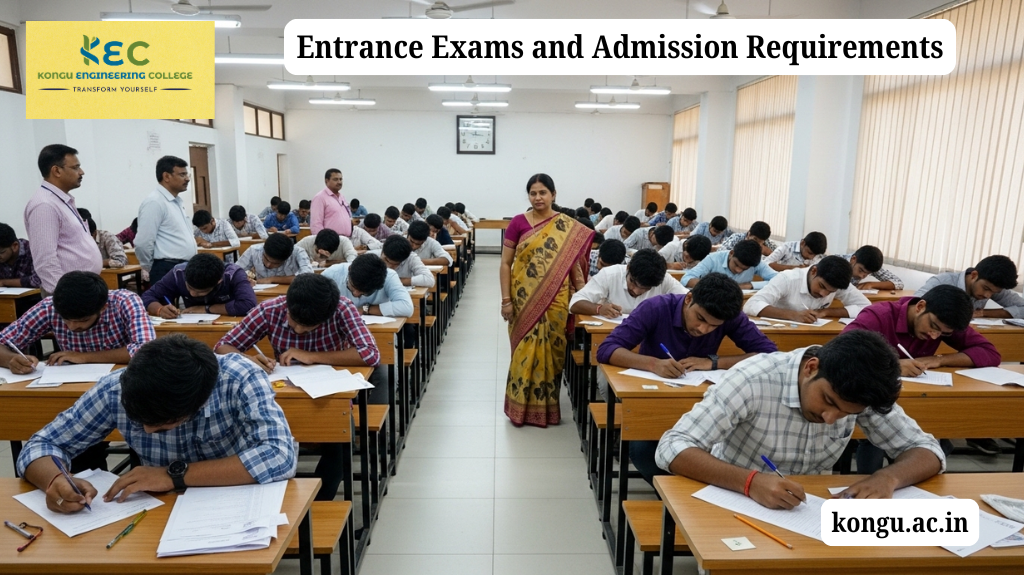
Step-by-Step Guide to Entrance Exams and Admission Requirements at Kongu Engineering College
Choosing the right engineering college begins with understanding the selection process. Students must prepare for competitive tests and meet institutional eligibility standards. Entrance Exams and Admission Requirements play a vital role in securing admission to Kongu Engineering College. A clear understanding of these procedures helps aspirants plan effectively and pursue their academic goals with confidence. Understanding Engineering Entrance Exams in India Engineering entrance examinations assess students’ aptitude, analytical skills, and subject knowledge. If someone questioning or confusion on What are all the Entrance Exam Available for Engineering ? These exams serve as gateways to reputed institutions. Preparing strategically enhances the chances of securing admission to top colleges like Kongu Engineering College. Major Entrance Exams for Engineering Aspirants Students aiming for engineering programs should be familiar with national and state-level examinations: Understanding these examinations strengthens preparation and aligns with the Entrance Exams and Admission Requirements for engineering education. Subjects and Exam Pattern Entrance exams typically evaluate students on core subjects studied in higher secondary education: Most exams follow an objective format with multiple-choice questions. Time management and conceptual clarity play a crucial role in achieving high scores. Eligibility Criteria for Entrance Exams To appear for engineering entrance examinations, candidates must meet specific requirements: These criteria ensure fairness and transparency in the selection process. Preparation Tips for Success in Entrance Exams A disciplined approach enhances performance and confidence. Strategic preparation improves exam readiness and increases admission prospects. Admission Process After Succeed in Entrance Engineering aspirants must qualify through merit-based evaluations such as national or state-level entrance systems. Candidates need strong academic records, valid documentation, and successful participation in counseling. Meeting eligibility standards and adhering to official procedures ensures a smooth admission process at Kongu Engineering College. After qualifying through merit-based evaluation, students can apply through the appropriate counseling process. Understanding the Entrance Examshelps applicants navigate the admission stages efficiently. Your Gateway to Engineering Excellence Understanding Entrance Exams and Admission Requirements enables students to prepare strategically and secure admission with confidence. By focusing on competitive examinations and following a structured admission process, aspirants can build a strong academic foundation. Kongu Engineering College offers the ideal environment for innovation, learning, and career success. “Prepare for success – Qualify through the entrance process and secure your future at Kongu Engineering College today”
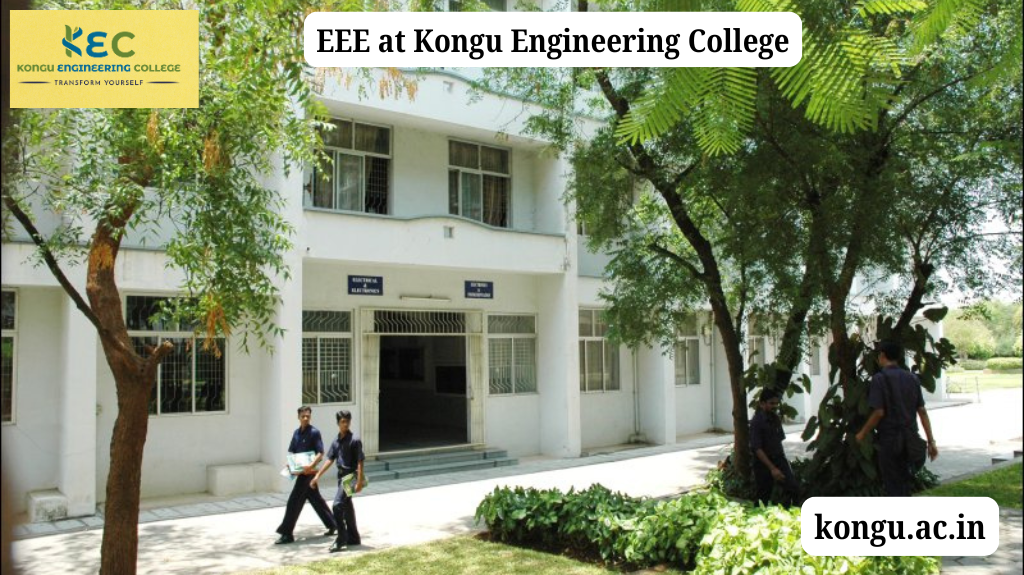
EEE at Kongu Engineering College: innovation in energy, automation, and control
Electrical and electronics engineering plays a vital role in powering modern infrastructure and intelligent systems. The EEE at Kongu Engineering College program is designed to build a strong foundation in electrical principles while addressing emerging technologies. Moreover, the curriculum supports innovation in energy systems, automation, and control engineering. Students gain both theoretical clarity and practical exposure, which helps them adapt to evolving industrial and societal needs. EEE at Kongu Engineering College: academic focus and learning framework The academic framework follows a structured and progressive learning approach. Initial semesters emphasize core electrical concepts, while advanced courses introduce applied and interdisciplinary areas. Laboratory sessions and project work strengthen understanding through hands-on practice. Core academic areas Through this structured approach, students develop analytical thinking and technical accuracy. In addition, continuous evaluation ensures consistent learning outcomes without overreliance on examinations. Skill development and practical exposure Skill development remains an integral part of the program. Students participate in technical workshops, seminars, and project-based activities that enhance problem-solving ability. Furthermore, simulation tools and laboratory equipment support applied learning. The EEE at Kongu Engineering College encourages teamwork and effective communication through group projects and presentations. As a result, students gain confidence in technical discussions and collaborative environments. Soft skills such as documentation and professional ethics also receive due emphasis, which supports long-term career growth. Innovation in energy and automation The program aligns closely with current industry trends in energy efficiency and automation. Students explore modern electrical systems that support sustainable development. Additionally, exposure to automation concepts prepares them for intelligent control applications. The EEE at Kongu Engineering College enables learners to understand renewable energy integration, smart systems, and efficient power management. Consequently, graduates develop the ability to contribute meaningfully to industries focused on innovation and sustainability. Career scope and future pathways Graduates can pursue diverse opportunities across core and allied sectors. The program prepares students for technical roles as well as higher studies. Career pathways include: The program offers a balanced combination of academic strength, skill enhancement, and industry relevance. It prepares students to meet future challenges with competence and responsibility. “Learn how innovation and hands-on learning power EEE at Kongu Engineering College @ https://kongu.ac.in/ ”
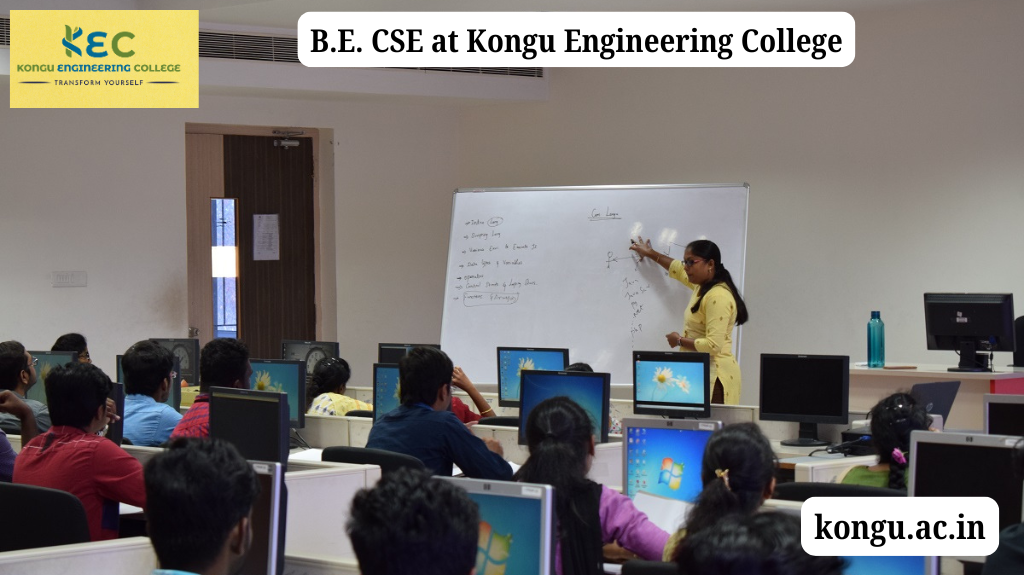
B.E. CSE at Kongu Engineering College: scope of computer science and engineering studies
Computer science and engineering has become one of the most influential disciplines in today’s digital era. The B.E. CSE at Kongu Engineering College offers students a structured academic environment that blends strong theoretical foundations with practical learning. Moreover, the program focuses on developing problem-solving abilities, logical thinking, and technical competence. As technology continues to evolve, this course equips students with the knowledge required to adapt, innovate, and contribute effectively across industries. B.E. CSE at Kongu Engineering College: Scope for the Future The scope of computer science and engineering is broad and continuously expanding. Students gain exposure to core computing concepts while gradually exploring advanced domains. Consequently, the program supports both academic excellence and professional readiness. The curriculum emphasizes clarity of concepts, consistent assessment, and hands-on learning. Academic framework and learning approach The academic structure is carefully designed to ensure progressive learning and alignment with university and industry standards. Early semesters focus on fundamentals, while later stages strengthen specialization. In addition, laboratory sessions reinforce classroom instruction. Key academic components include: Through this framework, students enrolled in the B.E. CSE at Kongu Engineering College develop analytical thinking and technical accuracy. As a result, they gain confidence in applying concepts to real-world scenarios. Skill development and practical exposure Skill development remains central to the learning experience. Along with coursework, students participate in technical workshops, seminars, and project-based activities. These opportunities improve teamwork, communication, and professional discipline. Furthermore, project work encourages independent learning and innovation. The B.E CSE at Kongu Engineering College also promotes the use of modern tools and computing platforms during practical sessions. Therefore, students become familiar with industry-relevant environments. Soft skills such as presentation, documentation, and collaboration receive equal attention, which enhances overall employability. Career pathways and future prospects Graduates can pursue diverse career options across technology-driven sectors in India and abroad. The B.E CSE at Kongu Engineering College prepares students for both core technical roles and interdisciplinary opportunities. Additionally, the program supports higher studies and research-oriented paths. Common career avenues include: In summary, the program provides a balanced academic journey supported by continuous skill enhancement and professional readiness. It enables students to remain adaptable, competent, and future-ready in an ever-changing technological landscape.
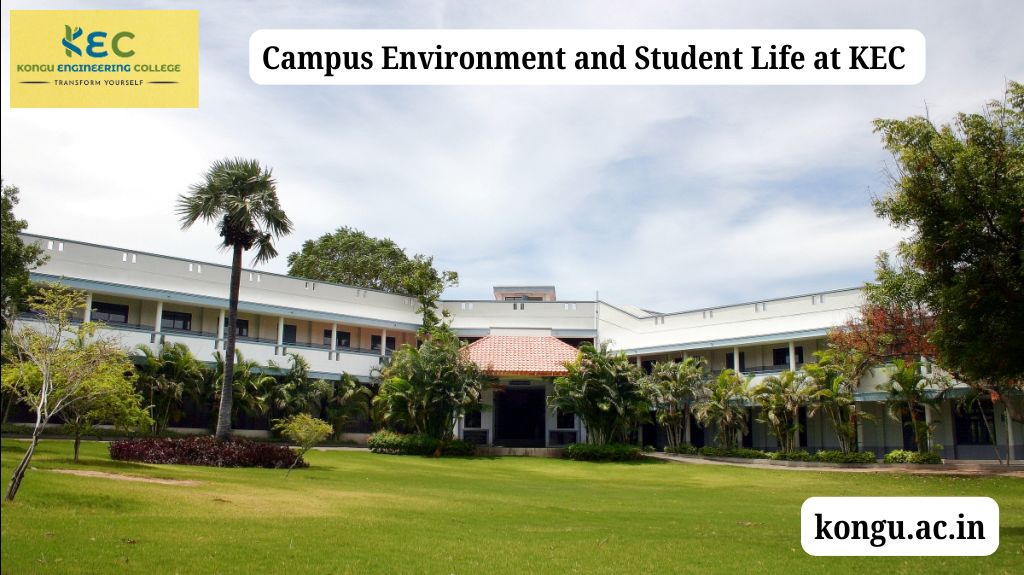
Campus Environment and Student Life at Kongu Engineering College, Perundurai
Kongu Engineering College is located on a large, self-contained campus at Perundurai. The campus environment and student life at Kongu Engineering College is maintained as a green and organised academic space with dedicated facilities for instruction, residence, sports, and student services. Institutional practices related to cleanliness, landscaping, and waste management are implemented as part of campus maintenance. The campus is Wi-Fi enabled and includes academic blocks, laboratories, hostels, sports grounds, service buildings, and common facilities required for daily student life. Residential Facilities and Hostel Life On-campus hostel facilities are provided separately for boys and girls. Multiple hostel blocks function under appointed wardens and established hostel rules. Residential facilities are supported by: Hostel operations follow prescribed timings and entry procedures as published in institutional rules. Guest houses and staff quarters are also available within the campus. Transport and Daily Mobility The institution operates its own transport system to support daily commuting for students and staff. College buses connect the campus with nearby towns and surrounding regions. Transport services are managed with designated routes, schedules, and safety measures as part of institutional administration. Student Activities and Organised Engagement Student participation is coordinated through recognised clubs, associations, and institutional cells. Activities are conducted under faculty supervision and institutional approval. Student engagement includes: Events, workshops, and programmes are conducted as part of student-centric activities reported through IQAC and annual documentation. Sports and Physical Education Sports activities are managed by the Department of Physical Education. The campus includes facilities for both indoor and outdoor games. Available infrastructure includes: The college conducts regular coaching programmes, inter-college tournaments, and annual sports events such as the Kongu Trophy and Sports Day. Student Support and Welfare Services Student life is supported through formally constituted support systems. These include: Faculty mentoring and counselling structures are documented as part of institutional student support practices. Health, Food, and Campus Services The campus includes a medical centre with ambulance services. Food facilities such as canteens and food courts operate within the campus. Additional services include: These facilities support daily student requirements as listed in campus infrastructure disclosures. Discipline and Campus Regulations The institution follows a published Code of Conduct governing attendance, classroom discipline, hostel rules, and campus behaviour. Regulations related to mobile phone usage, dress code, and student conduct are documented. Anti-ragging policies are enforced in accordance with statutory guidelines. Campus Life within the Institutional Framework The Campus Environment and Student Life at Kongu Engineering College are organised through documented facilities, approved activities, and regulated support systems. Academic schedules, residential arrangements, student services, and co-curricular participation function within clearly defined institutional structures published by the college.