
In today’s competitive world, practical skills matter as much as academic knowledge. Students and parents often ask, What Are All the Skill-Based Courses Available to ensure better employability and career advancement. Kongu Engineering College addresses this need by offering industry-oriented programs that blend technical expertise with real-world applications. With modern infrastructure and strong academic support, the institution prepares students for a dynamic professional landscape. Skill-Based Courses Available at Kongu Engineering College Kongu Engineering College offers a wide range of career-focused courses designed to enhance technical proficiency and industry readiness. These programs emphasize experiential learning, ensuring students graduate with both knowledge and practical competence. Key Skill-Based Programs Each program integrates practical training through workshops, internships, and industry collaborations. What Makes These Courses Career-Oriented? Skill-based courses at Kongu Engineering College focus on hands-on learning, industry exposure, and technical proficiency. These programs integrate internships, modern laboratories, and placement training. As a result, students gain job-ready skills, making them competitive in global markets and ensuring sustainable career growth. Students benefit from a comprehensive learning environment that promotes innovation and problem-solving. Through coding boot camps, technical workshops, and project-based learning, they understand What Are All the Skill-Based Courses Available for shaping a future-ready career. Continuous skill development ensures adaptability in rapidly evolving industries. Placement Opportunities and Institutional Credibility Kongu Engineering College has built a strong reputation for academic excellence and placement success. The institution’s industry partnerships enable students to gain real-time exposure and career opportunities. By understanding Skill-Based Courses, aspirants can select programs that lead to high-growth roles in technology, manufacturing, and innovation sectors. Graduates secure positions such as: Natural internal linking cues encourage readers to explore related sections on placements, admissions, and campus facilities for deeper insights. Skill-based education empowers students with the tools required for professional success. Kongu Engineering College stands out for its commitment to quality education, practical training, and strong industry connections. Exploring What Are All the Skill-Based Courses Available enables students to make informed decisions and build rewarding careers in a technology-driven world. “Kick-start your future with industry-ready skill-based courses at Kongu Engineering College and transform your career potential today”

Addmission Details for Students: Complete Guide to Counselling, College Selection & Application Process
Understanding the Addmission details for Students is no longer just about filling out forms or attending counselling sessions.It is about making one of the most important life decisions that directly impacts a student’s academic journey and career path. In today’s competitive educational landscape, especially in engineering admissions, students must be well-informed, strategic, and proactive.The Addmission details for Students include multiple stages such as counselling, application procedures, documentation, decision-making, and final enrollment. Each stage comes with its own requirements, challenges, and opportunities. Missing even a small step can lead to delays or missed chances, which is why awareness and preparation are key.This comprehensive guide is designed to simplify the Addmission details for Students by breaking down every stage in detail. Whether you are a student planning your future or a parent guiding your child, this blog will help you understand the complete process, overcome challenges, and make the right decisions with confidence. Detailed Councelling Process in Addmission Details for Students The counselling process is the backbone of the Addmission, especially for engineering aspirants. It is the structured method through which students are allotted seats in colleges based on merit, reservation policies, and personal preferences. Understanding Centralized Counselling Centralized counselling systems are designed to bring transparency and fairness into the admission process. In most states, engineering admissions are conducted through a single-window counselling system. This means that instead of applying to multiple colleges separately, students register in one portal where all participating colleges are listed. In the Addmission details for Students, this step ensures that students with higher ranks get priority in selecting their desired colleges and courses. The system works based on merit lists, which are prepared using entrance exam scores or academic performance. Students must understand how the ranking system works, as it directly influences their chances of getting into top colleges. Being aware of cut-off trends from previous years can also help in setting realistic expectations. Document Verification Process Document verification is a crucial part of the Addmission. Without proper verification, students cannot proceed further in the admission process. This stage involves submitting original documents such as: The purpose of verification is to ensure that all the information provided by the student is accurate and authentic. Any mismatch or missing document can lead to delays or even disqualification. To avoid issues, students should prepare a checklist of required documents well in advance. Keeping both physical and digital copies organized can save time and reduce stress during verification. Choice Filling and Locking Choice filling is one of the most strategic steps in the Addmission details for Students. Here, students select their preferred colleges and courses in order of priority. This stage requires careful planning. Many students make the mistake of choosing colleges based only on popularity without considering factors like: Once choices are filled, students must lock them before the deadline. After locking, no changes can be made. Hence, it is important to review all options carefully before final submission. A smart strategy is to include a mix of dream colleges, target colleges, and safe options to increase the chances of seat allotment. Seat Allotment and Confirmation Seat allotment is the final stage of counselling in the Addmission. Based on the student’s rank, preferences, and seat availability, the system assigns a college and course. After allotment, students must: Failure to complete these steps can result in losing the allotted seat. Some counselling systems also provide options like upgradation or participation in further rounds. Understanding these options can help students make better decisions if they are not satisfied with their initial allotment. Difficulties in Admission: Tips to Overcome That in Addmission Details for Students While the Addmission details for Students may seem straightforward, many students face challenges that can make the process overwhelming. Identifying these difficulties and learning how to overcome them is essential. Lack of Proper Guidance One of the biggest challenges in the Addmission is the lack of proper guidance. Many students rely on incomplete or incorrect information, leading to confusion. To overcome this: Having the right information at the right time can make a huge difference in the admission journey. Missing Deadlines Admission processes are time-sensitive, and missing deadlines can cost students valuable opportunities. Important deadlines include: To manage this effectively, students should maintain a calendar or planner. Setting reminders and staying updated with official announcements can prevent last-minute stress. Improper College Selection Choosing the wrong college is a common mistake in the Addmission. Many students prioritize peer pressure or trends over personal interests. To make the right choice: A well-informed decision ensures better academic experience and career growth. Handling Stress and Pressure The admission process can be emotionally challenging for students and parents. Anxiety about results, competition, and future prospects can create stress. To manage this: Remember, the Addmission details for Students is just one phase of life, and making calm, thoughtful decisions leads to better outcomes. Right Decision Over Choosing Engineering College in Addmission Details for Students Selecting the right college is one of the most important aspects of the Addmission details for Students. It is not just about getting admission.It is about choosing a place that supports your growth and aspirations. Check Accreditation and Ranking Accreditation ensures that the college meets quality standards set by educational authorities. Choosing an accredited institution guarantees recognized degrees and better opportunities. Rankings also provide insights into the college’s reputation, faculty quality, and infrastructure. Evaluate Placement Opportunities Placement records are a key factor in the Addmission details for Students. A good college should have: Students should analyze placement statistics and average salary packages before making a decision. Infrastructure and Facilities Modern infrastructure plays a significant role in enhancing the learning experience. Facilities such as: help students gain practical knowledge and skills. Location and Campus Environment The location of the college influences exposure, opportunities, and lifestyle. A positive campus environment encourages learning, creativity, and personal development. Students should choose a college that provides both academic excellence and a supportive atmosphere. College Application Process in Addmission Details for Students The application
Top Engineering and Technology Courses at Kongu Engineering College
Engineering continues to shape the future through innovation and technological progress. Students seeking industry-relevant education often explore the Top Engineering and Technology Courses to build rewarding careers. Kongu Engineering College stands out for its academic excellence, modern infrastructure, and strong placement record. With a focus on practical learning and emerging technologies, the institution prepares graduates to excel in competitive global industries. Top Engineering and Technology Courses at Kongu Engineering College Kongu Engineering College offers a diverse range of programs designed to meet industry demands. These courses blend theoretical knowledge with hands-on training, ensuring students develop both technical and analytical skills. Popular Engineering Programs Students can choose from highly sought-after disciplines such as: Each program emphasizes innovation, research, and real-world applications, making them part of theEngineering and Technology Courses available today. Why Choose Engineering at Kongu Engineering College? Kongu Engineering College offers industry-aligned engineering programs with modern laboratories, experienced faculty, and excellent placement opportunities. Accredited by reputed bodies and affiliated with Anna University, the institution ensures quality education, practical exposure, and strong career prospects for aspiring engineers in diverse technological fields. Engineering programs at Kongu Engineering College are structured to provide comprehensive technical knowledge and practical experience. Students gain exposure to advanced tools, innovation hubs, and interdisciplinary learning. These factors contribute to the reputation of offering the Engineering and Technology Courses for aspiring engineers. Placement Opportunities and Career Prospects A strong placement ecosystem ensures that students transition smoothly from education to employment. The dedicated training and placement cell equips learners with essential skills such as aptitude, communication, and technical expertise. Graduates secure roles such as: Prospective students can explore related admission guides and placement records through the institution’s official resources for deeper insights. Choosing the right engineering program is a critical step toward a successful future. Kongu Engineering College provides academic excellence, industry exposure, and strong placement support. With cutting-edge facilities and future-ready curricula, it continues to offer the Top Engineering and Technology Courses that empower students to become leaders in innovation and technology. “Apply to Kongu Engineering College today and step into a future driven by innovation and excellence”

Best High-Paying Career Courses at Kongu Engineering College for a Successful Future
Choosing the right academic path shapes long-term career success and financial stability. Students today seek programs that combine quality education with excellent placement opportunities. Best High-Paying Career Courses provide the skills and industry exposure needed to secure rewarding jobs. Kongu Engineering College stands out for its academic excellence, modern infrastructure, and strong industry connections, making it a preferred destination for ambitious learners. What Makes a Course High-Paying? A high-paying course aligns with industry demand, technological advancements, and employability. Selecting the right program ensures professional growth and job security. Factors such as accreditation, faculty expertise, and placement records play a vital role in determining a course’s value. Best High-Paying Career Courses at Kongu Engineering College Kongu Engineering College offers a range of programs designed to meet evolving industry demands. Each course equips students with practical knowledge and technical expertise. Computer Science and Engineering This program focuses on software development, artificial intelligence, and data science. Graduates secure roles in leading technology firms with competitive salary packages. Artificial Intelligence and Data Science AI and data-driven technologies continue to transform industries. Students gain hands-on experience through advanced labs and real-world projects. Electronics and Communication Engineering This discipline prepares students for careers in telecommunications, embedded systems, and automation. It offers strong prospects in both public and private sectors. Information Technology IT programs emphasize programming, networking, and cloud computing. Graduates find opportunities in global software companies and digital enterprises. Computer Science, Artificial Intelligence, Information Technology, and Electronics and Communication Engineering offer the highest salary potential. These programs combine technical expertise with industry relevance. Graduates gain access to global opportunities, strong placement packages, and long-term career growth in rapidly expanding sectors. Career Opportunities and Placement Success Graduates from Best High-Paying Career Courses benefit from excellent career prospects. Kongu Engineering College maintains strong partnerships with reputed organizations, ensuring consistent placement outcomes. Students receive professional training, internship exposure, and skill enhancement programs that prepare them for competitive roles in top industries. Top Career Roles These roles offer attractive compensation and global career mobility. Why Choose Kongu Engineering College? Selecting the right institution is as important as choosing the right course. Best High-Paying Career Courses at Kongu Engineering College combine academic excellence with industry-driven training. The college emphasizes innovation, research, and career development, ensuring graduates are well-prepared for the future. For more details, explore internal sections on admissions, placements, and campus facilities to make an informed decision.A well-chosen academic program paves the way for professional success and financial stability. By enrolling in Career Courses, students gain access to quality education, advanced infrastructure, and exceptional placement opportunities. Kongu Engineering College empowers learners to build rewarding careers and achieve their aspirations with confidence. Start your journey toward a prosperous future by enrolling in Kongu Engineering College today.

Process for College Application: A Complete Guide to Applying at Kongu Engineering College
Applying to an engineering college can feel complex without proper guidance. Many students struggle with forms, eligibility, and deadlines. Career Opportunities for Information Systems – Why Kongu Engineering College is the Right Choice highlights how the Process for College Application becomes easier when you understand each step clearly, and how Kongu Engineering College follows a structured and transparent admission system. Understanding Eligibility and Requirements Before applying, check the basic eligibility criteria. Most engineering programs require completion of higher secondary education with science subjects. Marks in Physics, Chemistry, and Mathematics play a key role. Also, keep essential documents ready: Having these prepared saves time during the application process. Process for College Application: Step-by-Step Guide Step 1: Online Registration Start by visiting the official admission portal. Fill in basic details like name, contact, and course preference. Double-check information before submission. Step 2: Application Form Submission Complete the form with academic details and upload documents. Ensure accuracy to avoid rejection. This step is the base of this Process. Step 3: Application Fee Payment Pay the required fee through online modes. Keep a copy of the receipt for reference. Step 4: Verification and Confirmation The college reviews submitted details and verifies documents. After approval, you receive confirmation and further instructions. Start with online registration and fill the application form accurately. Upload required documents after that check once and pay the fee. After verification, wait for confirmation. Following each step carefully ensures a smooth admission experience without delays or errors. Why Choose Kongu Engineering College? Kongu Engineering College offers a strong academic environment with modern labs and experienced faculty. The institution maintains consistent placement results across departments. Students also benefit from industry exposure and skill-based training. In addition, the Process for College Application is designed to be student-friendly. Clear instructions and support systems help applicants complete each step without confusion. Tips to Avoid Common Mistakes Many students lose opportunities due to small errors. However, simple precautions can prevent issues: Following these steps improves your chances of successful admission. This process becomes smooth when you stay organized and attentive. Applying to the right college is the first step toward a successful career. Kongu Engineering College offers a simple and structured admission process. With proper preparation, students can complete the Process for College Application without stress and secure their future. “Apply to Kongu Engineering College today and take the first step toward a successful engineering career”

How to Choose Right Engineering College? Make the Right Decision with Kongu Engineering College
Choosing a college shapes your career path and future opportunities. Many students feel confused while comparing options, courses, and outcomes. How to Choose Right Engineering College This becomes a critical question at this stage. A smart decision depends on factors like placements, infrastructure, and academic quality. So, understanding what truly matters helps you avoid costly mistakes. Key Factors to Consider Before Choosing Accreditation and Academic Quality Start by checking approvals and accreditation. Colleges with strong affiliations follow updated curricula. This ensures better learning and industry relevance. Also, experienced faculty improve subject clarity and practical exposure. Infrastructure and Labs Modern labs and facilities play a major role in engineering education. Good colleges provide updated equipment and project spaces. As a result, students gain hands-on experience along with theory. Placement Support and Training Placement records reveal real outcomes. Look for colleges with consistent recruiter visits and training programs. Choosing the Right Engineering Collegeoften depends on how well a college prepares students for jobs. How to Choose Right Engineering College? Key Decision Framework To simplify your decision, focus on measurable aspects. Compare colleges based on facilities, outcomes, and student support. Avoid choosing based only on reputation or trends. These points help you make a clear and logical comparison. Start by reviewing accreditation, placement records, and lab facilities. Then check faculty quality and internship opportunities. A good college balances academics with practical training. This approach ensures skill development and better job readiness after graduation. Why Kongu Engineering College Stands Out? What is Structural Engineering? Postgraduate Excellence in Structural Engineering at Kongu focuses on advanced concepts, practical design skills, and real-world applications, helping students build strong expertise and successful careers in structural engineering. Also, the college maintains a good track record in placements across engineering streams. How to Choose Right Engineering College This becomes easier when a college shows proven results and student success. Making the Final Decision After shortlisting colleges, compare them side by side.This gives real insights beyond brochures.Your decision should balance academics, placements, and personal goals. Choosing the Right Engineering Collegebecomes simple when you focus on value rather than popularity. Choosing the right college is a long-term investment in your future. Kongu Engineering College offers a balanced approach with quality education and strong placements. How to Choose Right Engineering College is no longer confusing when you follow a structured approach and choose wisely. “Choose Kongu Engineering College today and turn the right decision into a successful engineering career”
Admission Difficulties in Counselling: Common Challenges Students Face and How to Overcome Them?
Every year, students face confusion and pressure during the admission process. Admission Difficulties in Counselling often arise due to lack of clarity, limited time, and high competition. While counselling aims to simplify admissions, many students struggle to make the right decisions. However, with proper awareness and planning, these challenges can be managed effectively. This is why understanding the Counselling Process for Engineering Colleges: Step-by-Step Guide Featuring Kongu Engineering College becomes essential for making informed and confident admission choices. Common Challenges Students Face Lack of Clear Course Understanding Many students are unsure about course content, duration, and career scope. As a result, they select programs without proper research. This confusion often leads to wrong choicesin their career. Limited Awareness of Colleges Students may not fully understand college accreditation, lab facilities, or placement records. Therefore, they miss opportunities in reputed institutions. Time Pressure During Choice Filling Counselling rounds move quickly. Students must act fast while selecting colleges and courses. This urgency increases stress and leads to mistakes. High Competition Top colleges have limited seats. Students with similar scores compete for the same programs. This makes decision-making more difficult. Counselling Difficulties During Admission Process These challenges often occur due to lack of guidance and preparation. Students who enter counselling without research feel overwhelmed. Admission Difficulties in Counselling can affect final admission outcomes if not handled carefully. So, understanding the process in advance becomes essential. How to Overcome These Challenges? Research Before Counselling Students should explore course details, eligibility, and career options early. Checking lab facilities and placement records also helps in decision-making. Prioritize Colleges and Courses Prepare a list of preferred colleges based on interest and rank. This reduces confusion during the selection process. Seek Expert Guidance Talking to teachers, mentors, or career counsellors can improve clarity. They provide insights into industry trends and course value. Stay Updated During Rounds Regularly track counselling updates and deadlines. Missing a step may affect admission chances. Admission Difficulties in Counselling reduce when students stay informed and organized throughout the process. Why Do Students Face Admission Issues? Students face counselling difficulties due to limited awareness, time pressure, and unclear priorities. Many lack proper guidance on courses and colleges. With better planning, research, and expert support, they can make informed decisions and secure suitable admissions without stress. Admission counselling can feel complex, but it becomes easier with preparation. Students who stay informed and confident can overcome most challenges. Admission Difficulties in Counselling should not stop students from achieving their goals. With the right approach, they can secure admissions in suitable courses and build a strong academic future. “Make the right admission choice with expert guidance and step confidently into your future with Kongu Engineering College”
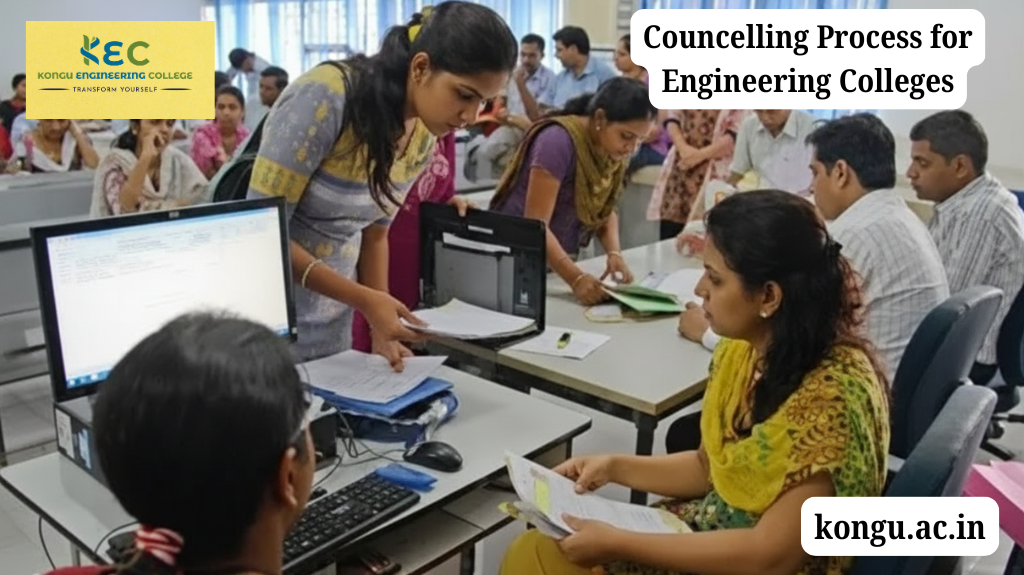
Councelling Process for Engineering Colleges: Step-by-Step Guide Featuring Kongu Engineering College
Choosing the right college begins with understanding the Councelling Process for Engineering Colleges. Many students feel confused during admission stages. However, a clear step-by-step approach makes the journey simple. Kongu Engineering College supports students with structured guidance, transparent procedures, and strong academic credibility. The counselling process is a structured admission method where students register, choose preferred colleges, and secure seats based on merit and eligibility. It includes document verification, choice filling, seat allotment, and final admission confirmation through systematic rounds. Councelling Process for Engineering Colleges – Step-by-Step Understanding each stage helps students make better decisions. Step 1: Registration and Application Students must first register through the official counselling portal. They need to enter academic details and upload required documents. Accuracy is important at this stage. Step 2: Document Verification Authorities verify certificates such as mark sheets, identity proof, and community certificates. Once approved, students move to the next phase. Step 3: Choice Filling and Locking Students select preferred colleges and courses. It is wise to prioritize institutions with strong placements and infrastructure like Kongu Engineering College. Step 4: Seat Allotment Based on merit rank and preferences, seats are allotted. Students can accept, upgrade, or participate in further rounds. Step 5: Admission Confirmation After seat allotment, students pay fees and confirm admission. This final step secures their place in the selected college. Why Kongu Engineering College is a Preferred Choice? Students often consider placement, labs, and faculty before finalizing a college. Why Kongu Engineering College Stands Out Among the Highest Placement Colleges in Erode is evident through its accredited programs and industry-focused curriculum. The campus offers advanced labs and practical training. Also, placement support remains consistent across departments. These factors improve career prospects and skill development. As a result, students benefit more from the Counselling Process for Engineering Colleges when they choose such institutions. Tips to Navigate the Counselling Process Planning ahead helps reduce stress during admissions. These steps help students make informed decisions. Also, awareness improves outcomes during the Councelling Process. The admission journey becomes easier with the right understanding and preparation. The Councelling Process for Engineering Colleges allows students to explore options and secure the best fit. With strong infrastructure, placements, and academic support, Kongu Engineering College remains a reliable choice for aspiring engineers.

Placement Opportunities for Computer and Technology Courses – Kongu Engineering College Placement
Students look for strong career outcomes when choosing computer-based degrees. Placement Opportunities for Computer and Technology Courses play a key role in that decision. Kongu Engineering College builds a clear path from classroom learning to industry roles. The institution focuses on skill-based training, modern labs, and consistent placement support. As a result, students gain confidence and job readiness before graduation. Why These Computer Technology Courses Stand Out Today? In today’s fast-changing tech world, certain courses gain more demand than others. Recruiters prefer candidates with practical skills and adaptable knowledge. Courses like B.Sc. Computer Systems and Design, B.Sc. Information Systems, and B.Sc. Software Systems are now leading choices. These programs stand out because they focus on real-world applications. While many traditional degrees remain theory-heavy, these courses emphasize hands-on learning. As a result, they are often seen as some of the best courses for placement in the technology domain. Courses That Build Career-Ready Skills B.Sc. Computer Systems and Design This program focuses on system architecture, UI design, and development tools. Students work on real-time projects and lab-based learning. So, they gain strong technical and creative skills. B.Sc. Information Systems The course blends data management with business applications. Students learn database systems, analytics, and enterprise tools. This mix prepares them for IT and business-driven roles. B.Sc. Software Systems This program builds strong coding and development skills. It covers programming, testing, and deployment methods. Students also gain internship experience during the course. Placement Opportunities for Computer and Technology Courses Kongu Engineering College provides structured placement training from early semesters. This includes aptitude sessions, coding practice, and mock interviews. The placement cell connects students with top recruiters in IT and software sectors. Students benefit from: These efforts improve employability and help students secure roles in reputed companies. How These Courses Improve Placement Success? These three programs are designed based on current industry needs. As technology evolves, companies expect practical knowledge and problem-solving ability. Students from these courses meet those expectations. Also, the college maintains strong industry connections. This ensures updated curriculum and exposure to real-time tools. Placement Opportunities for Computer and Technology Courses improve when students stay aligned with industry trends. These courses focus on practical skills, industry exposure, and continuous training.They prepare students for real job roles through internships and projects.So, they are among the best choices for students aiming for strong placement outcomes. Career Roles After Graduation These are the areas student can have career in future: These roles offer steady growth and global opportunities. Placement Opportunities for Computer and Technology Courses ensure that students enter these roles with confidence and skills. Kongu Engineering College focuses on practical learning and career outcomes. These three computer technology courses are now leading options compared to many traditional programs. They offer better skill alignment and stronger placement potential. Placement Opportunities for Computer and Technology Courses continue to attract students seeking reliable and future-ready careers. “Start your tech career with confidence by choosing Kongu Engineering College, where skills meet strong placement success”
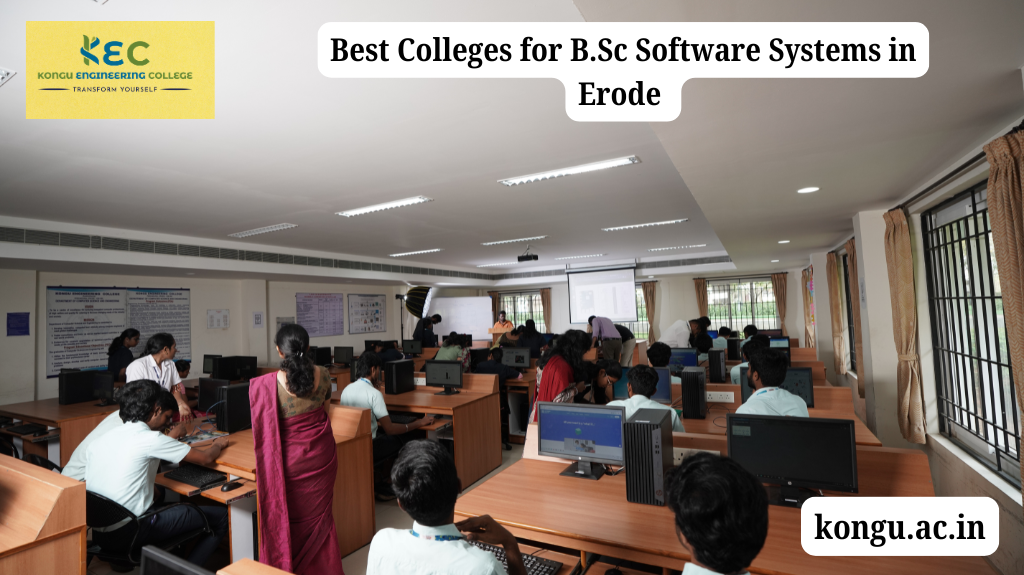
Best Colleges for B.Sc Software Systems in Erode – Why Students Prefer Kongu
Students who want a career in the software field usually search for the Best Colleges for B.Sc Software Systems in Erode before choosing where to study. The right college should offer strong academics, modern labs, and good placement support. Kongu Engineering College is often preferred because it combines practical learning, experienced faculty, and career-focused training. As a result, many students consider it one of the Best Colleges for B.Sc Software Systems in Erode when planning their future in computer and technology courses. Choosing a good Software Systems course is important because the IT industry expects both technical knowledge and real-world skills. Therefore, students should look for colleges with updated syllabus, proper infrastructure, and strong placement history. Kongu Engineering College provides these features, which makes it a trusted option for students interested in software and computer careers. What Makes Kongu One of the Best Colleges for B.Sc Software Systems in Erode? Students often compare colleges based on course quality, facilities, and placement results. Kongu Engineering College stands out because it offers industry-oriented training and a structured learning environment. Because the course includes both theory and practice, students gain confidence before entering the job market. Modern Laboratories and Practical Training Practical learning is necessary for software courses. Students must work with real tools to understand programming. Advanced computer labs, updated software platforms, regular programming practice sessions, project-based learning, and technical workshops help students gain strong practical knowledge during the course. With proper lab facilities and hands-on training, students understand real software development methods. Strong lab support helps students build the skills that companies expect from software graduates. B.Sc Software Systems teaches programming, database management, operating systems, and application development. The course focuses on practical skills, project work, and software tools. Students learn how real software systems are built and maintained, which prepares them for jobs in IT companies and technology industries. Career Scope After B.Sc Software Systems Students choose software courses because the career scope is wide. IT companies require graduates who understand programming, testing, and system development. These are the fields had a scope after degree Many students also continue higher studies in software, IT, or computer science. Colleges that provide strong training and placement support are often listed among the Best Colleges for B.Sc Software Systems in Erode, because career opportunities depend on the quality of education. Placement Training and Career Support Placement preparation starts early in the course so that students gain confidence before attending interviews. Students are given aptitude training sessions, regular coding practice programs, and communication skill classes to improve their performance. In addition, mock interviews are conducted to help them understand real interview situations, while internship guidance is provided to give industry exposure. These activities help students perform well during campus recruitment and increase their chances of getting placed in good companies. Because of consistent placement results, Kongu Engineering College is known as one of the Best Colleges for B.Sc Software Systems in Erode for students who want good job opportunities after graduation. Why Students Prefer Kongu for Software Systems? Students usually select colleges that provide both academic strength and career guidance. Kongu Engineering College offers a balanced learning environment that supports both. Students also benefit from seminars, workshops, and project training. These activities help them understand real software work. Those who compare different institutions often choose Kongu among the Best Colleges for B.Sc Software Systems in Erode because of its consistent academic results and career support. Career in Software Studies Selecting the right college for software studies is important for building a strong career. Students should choose institutions that provide practical training, experienced faculty, and good placement support. Kongu Engineering College offers a well-structured B.Sc Software Systems course with modern labs, industry-focused syllabus, and regular placement training. Because of its academic quality, infrastructure, and career guidance, many students consider Kongu while searching for the Best Colleges for B.Sc Software Systems in Erode. With proper training and strong placement support, the college continues to be a trusted choice for students who want to succeed in the software and technology field.