The Placement System at Kongu Engineering College functions as a structured institutional framework that supports students as they move from academic study to professional employment. Campus recruitment activities are coordinated for both undergraduate and postgraduate programmes through established institutional processes.
Placement activities are planned alongside academic schedules and departmental coordination. This alignment allows recruitment to progress in an organised manner without interrupting academic responsibilities.
Central Placement Cell
1.The Placement Cell at Kongu Engineering College has been functioning since 1998.
2. It acts as a formal link between academic departments and recruiting organisations.
3.The cell supports students during the transition from campus learning to workplace engagement.
4.It coordinates campus recruitment activities in an organised manner.
5.It facilitates communication between students and recruiting organisations.
6.It works with academic departments to align placement activities with academic schedules.
Career Development and Student Preparation
Career development support forms a core component of the placement framework. Students receive guidance to understand career pathways, role expectations, and recruitment processes across different sectors.
Preparation activities are organised in areas such as:
- Aptitude and reasoning
- Verbal ability
- Role-specific readiness support
These activities help students approach campus recruitment with clarity while continuing their academic coursework.

Industry Linkages and Internship Support
The Placement Cell maintains ongoing interaction with industry professionals and organisations. These relationships support campus recruitment drives, internship opportunities, and structured industry–academia engagement.
Information related to employment opportunities and internships is shared through institutional channels, enabling students to track and prepare for opportunities in a systematic manner during the later stages of their programmes.
Recent UG and PG Placement Outcomes
1. Recent graduating batches show steady placement activity across both undergraduate and postgraduate programmes.
2. Campus recruitment supports students in moving from academic completion to professional roles through organised recruitment cycles.
3. In undergraduate four-year programmes, many students secure employment through campus recruitment, while some choose to continue with higher studies.
4. Postgraduate two-year programmes also record consistent placement participation, in line with their programme size and academic focus.
5. Across recent academic cycles, undergraduate programmes show a gradual increase in student participation in placements, reflecting continuity in recruitment activity.
Recruiter Participation
Recruitment activity involves organisations from different sectors engaging with the campus through structured recruitment processes.
Recent engagement has included organisations such as:
- Soliton Technologies
- Mr. Cooper
- Presidio
- FourKites
- Codingmart
- Ajira
These engagements form part of the institution’s ongoing interaction with industry and are conducted within established academic and recruitment frameworks.
Placement as an Institutional Process
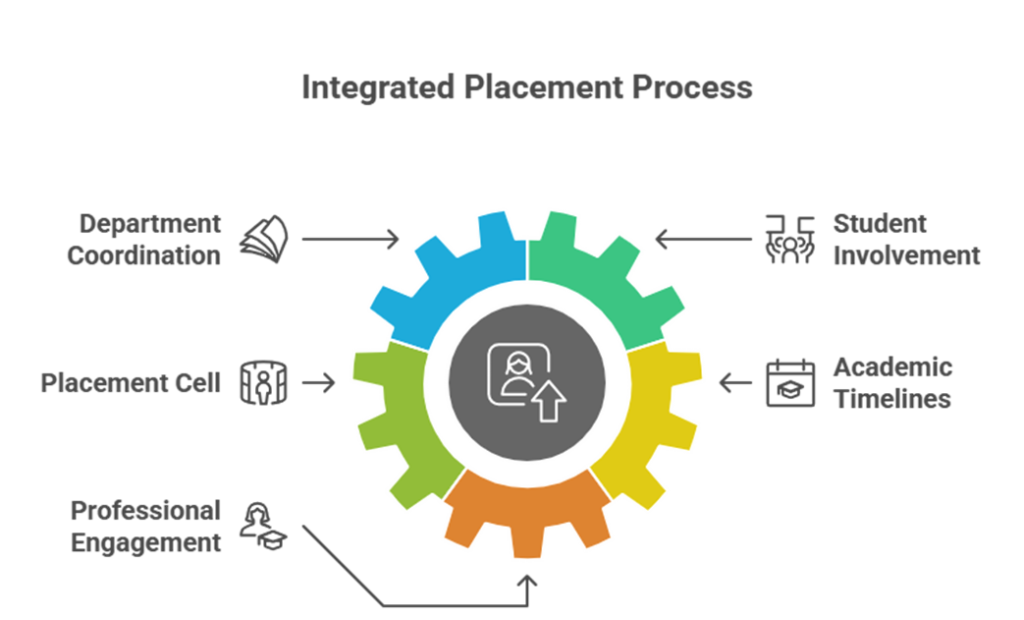
Placement activity at Kongu Engineering College is integrated into the broader academic lifecycle. Coordination between departments, students, and the Placement Cell ensures that recruitment activities follow institutional procedures and academic timelines.
Rather than functioning as a separate event, placements form part of the structured progression from academic completion to professional engagement.
Role of the Placement Framework
The Placement System at Kongu Engineering College provides a regulation-aligned pathway for career transition. Through coordinated preparation activities, long-term industry interaction, and organised recruitment processes, the framework supports steady movement from campus learning to employment within a stable institutional environment.