
Choosing the right postgraduate engineering program is a strategic decision. Students searching for the Best Pg Courses in Engineering Colleges expect academic depth, research infrastructure, strong faculty mentorship, and consistent placements. In Tamil Nadu, Kongu Engineering College has established itself as a structured, research-oriented institution offering advanced PG engineering programs aligned with industry demands.
Located in Perundurai, Erode, the college combines autonomous curriculum flexibility with NAAC accreditation and AICTE approval, creating a strong academic ecosystem for postgraduate specialization.
What Defines the Best Pg Courses in Engineering Colleges?
The Best Pg Courses in Engineering Colleges are not identified by brochures or promotional claims.
They are defined by measurable academic standards:
- Advanced specialization modules
- Research-based thesis work
- Industry-aligned laboratory training
- Faculty with doctoral qualifications
- Structured placement training
Postgraduate engineering education must bridge academic knowledge and industrial application. Kongu Engineering College structures its PG programs accordingly.
Institutional Strength and Accreditation
Academic credibility builds long-term value.
Kongu Engineering College is:
- Autonomous
- Affiliated to Anna University
- Accredited by National Assessment and Accreditation Council
- Approved by AICTE
Autonomous governance allows curriculum updates in emerging fields such as semiconductor systems, AI integration, smart grids, embedded architectures, and advanced structural analysis.
This adaptability strengthens its position among institutions offering the Best Pg Courses in Engineering Colleges in Tamil Nadu.
PG Engineering Programs Offered
The institution offers carefully structured M.E. and M.Tech programs designed for technical mastery.
M.E. Specializations
- Structural Engineering
- VLSI Design
- Communication Systems
- Computer Science and Engineering
- Power Systems Engineering
- Engineering Design
M.Tech Program
- Information Technology
- Food Technology
Each program spans two years and integrates advanced coursework, lab-intensive training, seminars, and a major dissertation.
Students evaluating the Best Pg Courses in Engineering Colleges often prioritize curriculum depth, and these programs are structured accordingly.
PG Engineering Courses – Program Overview
Kongu Engineering College offers specialized postgraduate engineering programs designed to provide deep technical expertise and research capability. Each program focuses on advanced subject knowledge, laboratory-intensive learning, and dissertation-based evaluation. Below is a brief introduction to every PG engineering course offered. Detailed insights into curriculum structure, career scope, admission process, and laboratory facilities will be covered in dedicated branch blogs.
M.E. Structural Engineering
M.E. Structural Engineering focuses on advanced analysis and design of buildings, bridges, and infrastructure systems. The program covers structural mechanics, earthquake-resistant design, advanced concrete technology, and finite element methods. Students gain exposure to structural modeling software and material testing laboratories.
A detailed blog will explain laboratory facilities, software tools, career opportunities in consultancy firms, and research scope in Tamil Nadu’s infrastructure sector.
M.E. VLSI Design
M.E. VLSI Design is centered on semiconductor device modeling, integrated circuit design, and hardware system development. The course includes digital and analog IC design, ASIC development, FPGA implementation, and EDA tool training.
An upcoming branch blog will provide complete information about chip design tools, semiconductor industry scope in India, research opportunities, and placement pathways.
M.E. Communication Systems
This program focuses on advanced wireless communication, signal processing, network systems, and embedded communication platforms. Students study modern communication protocols and digital signal techniques with lab-based simulations.
A separate branch blog will explain laboratory infrastructure, industry demand in telecom sectors, and research opportunities in communication technologies.
M.E. Computer Science and Engineering
M.E. Computer Science and Engineering emphasizes advanced computing concepts such as distributed systems, artificial intelligence, machine learning integration, data engineering, and cybersecurity principles. The curriculum includes project-based research and system architecture studies.
A detailed blog will explore specialization tracks, software industry placements, research publications, and emerging technology domains.
M.E. Power Systems Engineering
This program focuses on electrical power generation, transmission systems, smart grid technologies, and renewable energy integration. Students gain analytical exposure to power stability studies and system protection techniques.
An upcoming branch article will provide detailed coverage of laboratory facilities, career opportunities in power corporations, and renewable energy research potential.
M.E. Engineering Design
M.E. Engineering Design integrates mechanical system modeling, product development, CAD/CAM systems, and advanced manufacturing concepts. The program emphasizes simulation tools and real-world product design applications.
A separate blog will cover industrial collaborations, design software platforms, and placement roles in manufacturing industries.
M.Tech Information Technology
M.Tech Information Technology focuses on advanced software systems, enterprise architecture, cloud technologies, and data-driven applications. Students engage in system-level design projects and technical research.
A dedicated branch blog will explore IT industry demand, software architecture specialization, research prospects, and technical placement pathways.
M.Tech Food Technology
M.Tech Food Technology focuses on advanced food processing, preservation techniques, quality control systems, and food safety standards. The program integrates engineering principles with food science to improve product quality, shelf life, and large-scale manufacturing efficiency.
Students study topics such as food process engineering, packaging technology, food microbiology, thermal processing, and quality assurance systems. Laboratory sessions emphasize product development, testing methods, and industry-standard quality evaluation procedures.
Given Tamil Nadu’s strong agro-based and food processing industries, this specialization offers promising career pathways in food manufacturing companies, quality control laboratories, research organizations, and regulatory bodies.
A detailed branch blog will explore curriculum structure, laboratory infrastructure, industry demand in Erode and surrounding regions, placement opportunities, and admission eligibility for M.Tech Food Technology.
M.Sc Software System
M.Sc in Software Systems is a comprehensive postgraduate program designed to provide in-depth knowledge and practical skills in the field of software development, design, and management. The curriculum covers key areas such as programming languages, software engineering, systems architecture, database management, and networking.
It equips students with the tools needed to develop, test, and deploy software systems across various platforms. With a focus on both theoretical concepts and hands-on experience, the program prepares graduates for a successful career in the rapidly evolving tech industry. M.Sc Software Systems also emphasizes the importance of problem-solving, analytical thinking, and project
Curriculum Designed for Advanced Technical Specialization
Postgraduate education demands analytical rigor.
The curriculum includes:
- Core advanced subjects
- Emerging technology electives
- Research methodology
- Simulation-based experimentation
- Dissertation and viva defense
Syllabi are periodically updated under autonomous academic review boards. Subjects reflect real-world engineering trends rather than outdated theoretical frameworks.
This academic structure ensures graduates are industry-ready and research-capable.
Research Infrastructure and Laboratory Ecosystem
Research facilities define the credibility of the Best Pg Courses in Engineering Colleges.
Kongu Engineering College provides:
- VLSI simulation labs with licensed EDA tools
- Structural testing laboratories
- Power systems analysis labs
- High-performance computing centers
- Communication systems labs
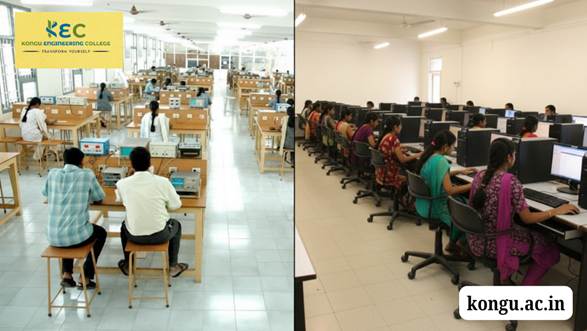
Students participate in funded research projects and publish technical papers under faculty supervision.
Laboratory training ensures familiarity with industry-grade software and hardware platforms.
Why Erode Is a Strategic Advantage for PG Engineering
Geographic positioning strengthens industrial exposure.
Erode and the surrounding Western Tamil Nadu region host:
- Textile engineering industries
- Manufacturing and fabrication units
- Electrical and power sector industries
- Proximity to Coimbatore’s industrial ecosystem
This industrial network enhances internships and thesis collaboration opportunities. Students searching for the Best Pg Courses in Engineering Colleges in Erode benefit from this regional connectivity.
Admission Process and Eligibility
Eligibility Criteria
- B.E. or B.Tech in relevant discipline
- Entrance qualification as per state norms
Duration
- Two years (four semesters)
Admission Mode
- Merit-based counseling process
The structured admission system ensures transparency and academic merit.
Placement Strength and Career Opportunities
Placement performance is a decisive factor when comparing the Best Pg Courses in Engineering Colleges.
The placement cell offers:
- Technical skill enhancement programs
- Core industry interview preparation
- Mock interviews and assessments
Core Placement Domains
- Semiconductor industries
- Structural consultancy firms
- Power generation companies
- Software development organizations
- R&D divisions
Roles Offered
- Design Engineer
- Research Engineer
- Systems Analyst
- Structural Consultant
- Embedded Systems Developer
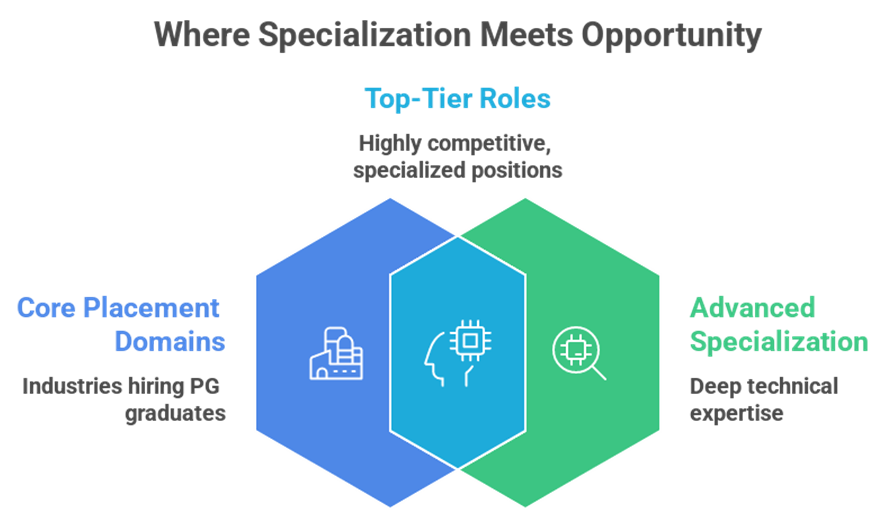
Advanced specialization allows PG graduates to secure technically superior roles.
Focus Area: M.E. VLSI Design
VLSI Design is among the most competitive PG specializations.
The program covers:
- Semiconductor device modeling
- Digital and analog IC design
- FPGA and ASIC design
- Hardware simulation
With India’s semiconductor development initiatives expanding, this specialization holds strong national demand.
Students exploring the Best Pg Courses in Engineering Colleges for electronics specialization often prioritize VLSI programs.
Industry Collaboration and Thesis Integration
Industry interaction enhances employability.
Students benefit from:
- Industry-sponsored projects
- Internships
- Guest lectures by domain experts
- Industry-driven dissertation topics
This ensures theoretical learning translates into practical engineering solutions.
Faculty Expertise and Research Mentorship
Faculty quality defines postgraduate outcomes.
Departments include:
- Professors with doctoral qualifications
- Active research publications
- Industry consultancy experience
Small PG batch sizes ensure personalized academic supervision.
Strong mentorship strengthens research output and project quality.
Career Scope After PG Engineering
Graduates from the Best Pg Courses in Engineering Colleges can pursue:
Industry Careers
- Core engineering roles
- Research and development
- Product design
- Systems architecture
Government Sector
- Public sector undertakings
- Research organizations
Higher Education
- Ph.D. programs
- Research fellowships
Entrepreneurship
- Engineering startups
- Technical consultancy
Specialization enhances both salary growth and career progression.
Why Kongu Engineering College Stands Apart
Among institutions offering the Best Pg Courses in Engineering Colleges, Kongu Engineering College stands out because of:
- Autonomous academic structure
- Strong accreditation
- Research-oriented programs
- Advanced laboratories
- Consistent placement support
- Industry collaboration
Academic consistency and institutional governance strengthen long-term credibility.
What makes Kongu Engineering College one of the best PG engineering colleges in Erode?
Kongu Engineering College offers autonomous curriculum updates, advanced research laboratories, NAAC accreditation, industry collaboration, and structured placement support. Its postgraduate programs integrate specialization, thesis work, and real-world exposure, making it a strong choice for engineering PG education in Tamil Nadu.
Frequently Asked Questions
Is Kongu Engineering College good for PG engineering?
Yes. It provides accredited, research-focused postgraduate programs with strong placement training.
What PG courses are available?
M.E. programs in Structural Engineering, VLSI Design, Communication Systems, CSE, Power Systems, Engineering Design, and M.Tech IT.
Are placements strong for PG students?
Yes. Core engineering and IT companies recruit PG graduates regularly.
Does the college support research publications?
Yes. PG students are encouraged to publish research and present papers.
Long-Term Academic Value
Postgraduate engineering builds:
- Analytical thinking
- Technical leadership
- Research depth
- Advanced problem-solving
Graduates often transition into senior technical roles more quickly.
Upcoming career to reach your Goal
Selecting the Best Pg Courses in Engineering Colleges requires evaluating accreditation, curriculum flexibility, research infrastructure, industry integration, and placement strength Kongu Engineering College in Erode delivers across these parameters through autonomous governance, advanced laboratories, research-driven academics, and strong industrial linkage.
For students seeking structured specialization and long-term engineering growth, this institution offers a credible postgraduate pathway in Tamil Nadu.
“Start your postgraduate journey with one of the leading engineering institutions.Check eligibility and apply to Kongu Engineering College’s PG programs today”