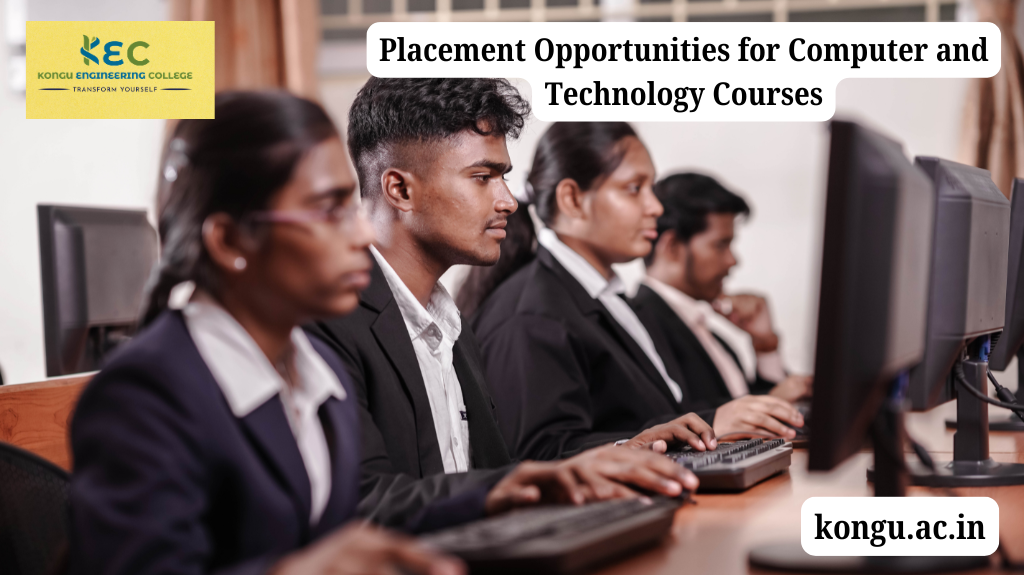
Students look for strong career outcomes when choosing computer-based degrees. Place ment Opportunities for Computer and Technology Courses play a key role in that decision. Kongu Engineering College builds a clear path from classroom learning to industry roles. The institution focuses on skill-based training, modern labs, and consistent placement support. As a result, students gain confidence and job readiness before graduation. Why These Computer Technology Courses Stand Out Today? In today’s fast-changing tech world, certain courses gain more demand than others. Recruiters prefer candidates with practical skills and adaptable knowledge. Courses like B.Sc. Computer Systems and Design, B.Sc. Information Systems, and B.Sc. Software Systems are now leading choices. These programs stand out because they focus on real-world applications. While many traditional degrees remain theory-heavy, these courses emphasize hands-on learning. As a result, they are often seen as some of the best courses for placement in the technology domain. Courses That Build Career-Ready Skills B.Sc. Computer Systems and Design This program focuses on system architecture, UI design, and development tools. Students work on real-time projects and lab-based learning. So, they gain strong technical and creative skills. B.Sc. Information Systems The course blends data management with business applications. Students learn database systems, analytics, and enterprise tools. This mix prepares them for IT and business-driven roles. B.Sc. Software Systems This program builds strong coding and development skills. It covers programming, testing, and deployment methods. Students also gain internship experience during the course. Placement Opportunities for Computer and Technology Courses Kongu Engineering College provides structured placement training from early semesters. This includes aptitude sessions, coding practice, and mock interviews. The placement cell connects students with top recruiters in IT and software sectors. Students benefit from: These efforts improve employability and help students secure roles in reputed companies. How These Courses Improve Placement Success? These three programs are designed based on current industry needs. As technology evolves, companies expect practical knowledge and problem-solving ability. Students from these courses meet those expectations. Also, the college maintains strong industry connections. This ensures updated curriculum and exposure to real-time tools. Placement Opportunities for Computer and Technology Courses improve when students stay aligned with industry trends. These courses focus on practical skills, industry exposure, and continuous training.They prepare students for real job roles through internships and projects.So, they are among the best choices for students aiming for strong placement outcomes. Career Roles After Graduation These are the areas student can have career in future: These roles offer steady growth and global opportunities. Placement Opportunities for Computer and Technology Courses ensure that students enter these roles with confidence and skills. Kongu Engineering College focuses on practical learning and career outcomes. These three computer technology courses are now leading options compared to many traditional programs. They offer better skill alignment and stronger placement potential. Placement Opportunities for Computer and Technology Courses continue to attract students seeking reliable and future-ready careers. “Start your tech career with confidence by choosing Kongu Engineering College, where skills meet strong placement success”
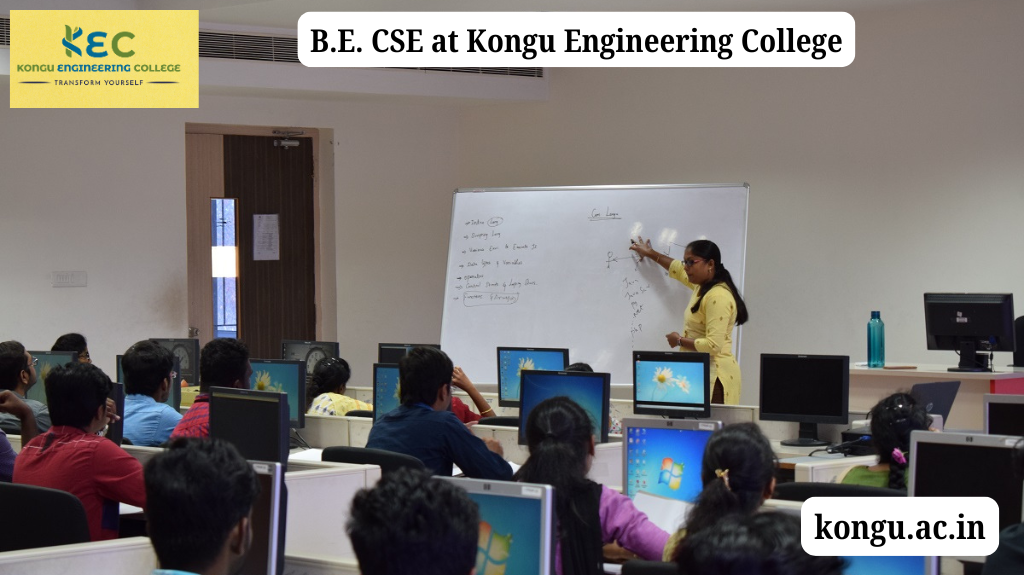
B.E. CSE at Kongu Engineering College: scope of computer science and engineering studies
Computer science and engineering has become one of the most influential disciplines in today’s digital era. The B.E. CSE at Kongu Engineering College offers students a structured academic environment that blends strong theoretical foundations with practical learning. Moreover, the program focuses on developing problem-solving abilities, logical thinking, and technical competence. As technology continues to evolve, this course equips students with the knowledge required to adapt, innovate, and contribute effectively across industries. B.E. CSE at Kongu Engineering College: Scope for the Future The scope of computer science and engineering is broad and continuously expanding. Students gain exposure to core computing concepts while gradually exploring advanced domains. Consequently, the program supports both academic excellence and professional readiness. The curriculum emphasizes clarity of concepts, consistent assessment, and hands-on learning. Academic framework and learning approach The academic structure is carefully designed to ensure progressive learning and alignment with university and industry standards. Early semesters focus on fundamentals, while later stages strengthen specialization. In addition, laboratory sessions reinforce classroom instruction. Key academic components include: Through this framework, students enrolled in the B.E. CSE at Kongu Engineering College develop analytical thinking and technical accuracy. As a result, they gain confidence in applying concepts to real-world scenarios. Skill development and practical exposure Skill development remains central to the learning experience. Along with coursework, students participate in technical workshops, seminars, and project-based activities. These opportunities improve teamwork, communication, and professional discipline. Furthermore, project work encourages independent learning and innovation. The B.E CSE at Kongu Engineering College also promotes the use of modern tools and computing platforms during practical sessions. Therefore, students become familiar with industry-relevant environments. Soft skills such as presentation, documentation, and collaboration receive equal attention, which enhances overall employability. Career pathways and future prospects Graduates can pursue diverse career options across technology-driven sectors in India and abroad. The B.E CSE at Kongu Engineering College prepares students for both core technical roles and interdisciplinary opportunities. Additionally, the program supports higher studies and research-oriented paths. Common career avenues include: In summary, the program provides a balanced academic journey supported by continuous skill enhancement and professional readiness. It enables students to remain adaptable, competent, and future-ready in an ever-changing technological landscape.