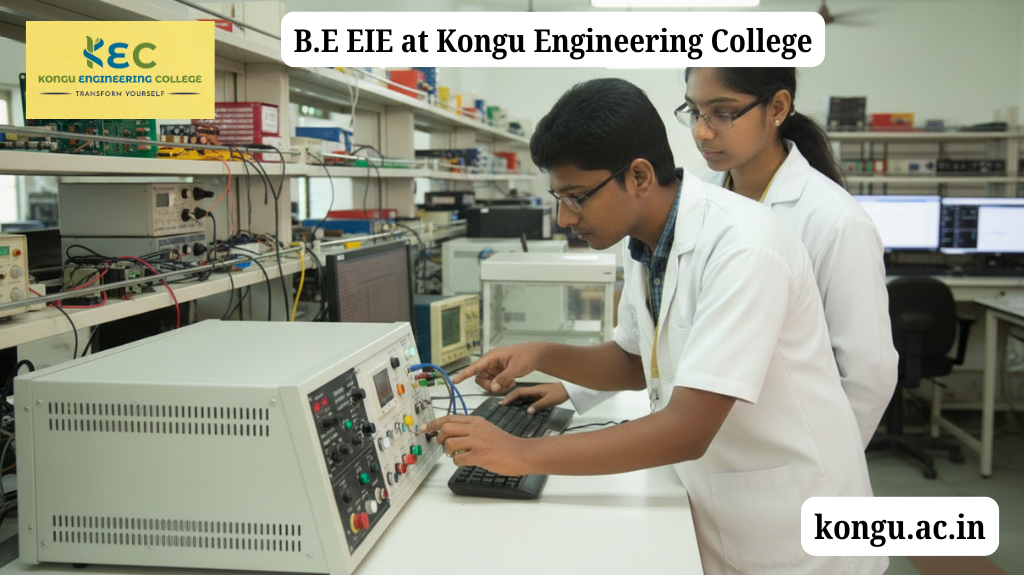
Choosing the right engineering program is a crucial step towards shaping a successful career, and B.E. Electronics and Instrumentation Engineering (EIE) at Kongu Engineering College stands out as an excellent choice for aspiring engineers. Kongu Engineering College, renowned for its strong academic reputation, offers a comprehensive program that blends theoretical knowledge with practical experience. The B.E. EIE course equips students with a deep understanding of electronics, instrumentation, and control systems. The college is committed to providing top-notch education, supported by state-of-the-art infrastructure and highly experienced faculty members. Students also benefit from exposure to real-world industry projects, ensuring they are well-prepared to meet the demands of the rapidly advancing electronics and instrumentation fields. With a well-rounded curriculum, modern labs, and a proven track record of successful placements, Kongu Engineering College is the ideal platform for those looking to build a solid foundation in engineering. Whether you’re interested in automation, power generation, or telecommunications, this program offers endless career possibilities. Why Choose B.E. EIE at Kongu Engineering College? Kongu Engineering College’s B.E. EIE program provides students with a strong foundation in electronics, instrumentation, and control systems. With its high-quality education, modern infrastructure, and strong industry collaborations, KEC ensures that students receive the best learning experience. Here’s why it’s an excellent choice: A Comprehensive Curriculum for Future Engineers The B.E. EIE at Kongu Engineering College is meticulously designed to provide students with a balanced mix of theoretical knowledge and practical expertise. The curriculum is continuously updated to align with the latest industry standards and technological innovations. Throughout the course, students delve into a wide array of subjects, including Analog and Digital Electronics, Instrumentation Systems, Control Systems, and Microcontrollers and Embedded Systems. This comprehensive and forward-thinking curriculum ensures that students are not only well-versed in the fundamentals but are also equipped to tackle the dynamic challenges of the electronics and instrumentation sectors. By the time they graduate, students are fully prepared to step into the workforce, ready to contribute effectively from day one. Career Prospects After Completing EIE at Kongu Engineering College Graduating with a B.E. EIE from Kongu Engineering College opens doors to numerous career opportunities. The electronics and instrumentation field offers a wide range of roles in industries such as: Kongu Engineering College’s strong industry connections and placement support ensure that students have access to top job opportunities, preparing them for successful careers. A Gateway to a Bright Career The B.E. EIE program at Kongu Engineering College is more than just a degree.It’s a comprehensive educational experience that prepares students for a successful career in electronics and instrumentation. With a cutting-edge curriculum, experienced faculty, top-tier facilities, and excellent placement support, KEC is the perfect place for aspiring engineers. If you’re looking for a program that provides both theoretical knowledge and practical experience in electronics and instrumentation, B.E. EIE at Kongu Engineering College is the gateway to a bright and successful career in this dynamic field. “Explore the B.E. EIE program at Kongu Engineering College@ https://kongu.ac.in/eie today and start your journey towards a successful engineering career!”
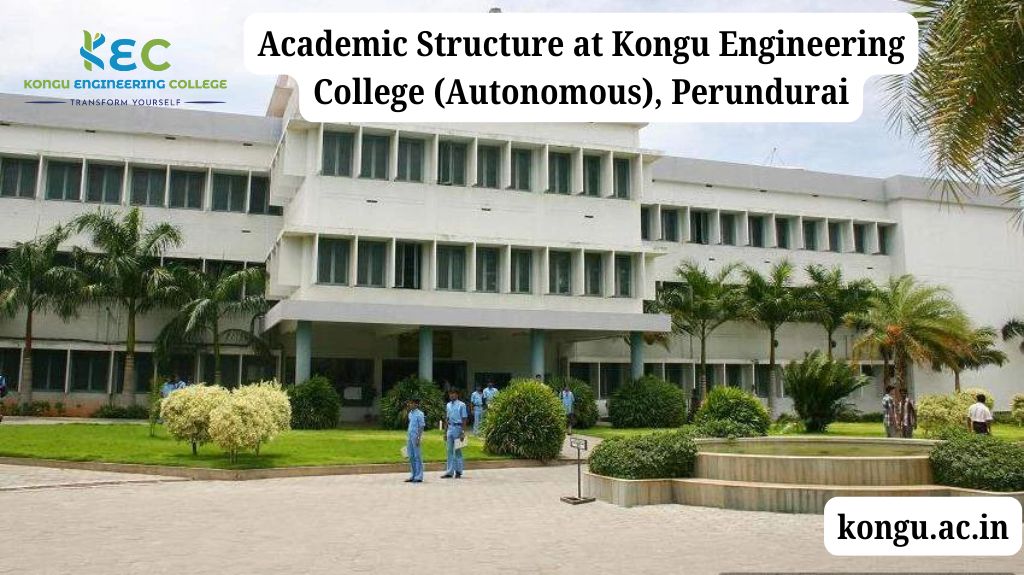
Academic Structure at Kongu Engineering College (Autonomous), Perundurai
The Academic Structure at Kongu Engineering College is organised within an autonomous academic framework while continuing its affiliation with Anna University. This structure enables the institution to frame its own academic regulations and curricula within the guidelines of the affiliating university. Academic activities follow clearly defined regulations and academic calendars that specify teaching schedules, assessment periods, and examination timelines across programmes. Each admitted batch follows a separate regulation document. These regulations outline curriculum structure, credit requirements, contact hours, and evaluation methods for theory courses, laboratory work, and project components. This regulation-based approach ensures consistency across departments and provides students with a predictable academic pathway from admission to programme completion. Academic Departments and Programme Framework Kongu Engineering College offers academic programmes across four broad categories: Engineering education is delivered through departments including Civil Engineering, Mechanical Engineering, Electrical and Electronics Engineering, Electronics and Communication Engineering, Electronics and Instrumentation Engineering, Computer Science and Engineering, Information Technology, Artificial Intelligence and related specialised areas. These programmes are supported by applied sciences departments that handle foundational courses in Mathematics, Physics, Chemistry, and English. Each department functions within a common institutional framework while managing its own syllabi, laboratory courses, electives, and assessment methods. Academic coordinators and department-level boards oversee curriculum delivery, timetable planning, and monitoring of academic progress in alignment with institutional regulations. Examination and Evaluation System Examinations and evaluation processes are administered through the office of the Controller of Examinations. This office is responsible for scheduling examinations, implementing academic regulations related to assessment, processing results, and maintaining academic records. The evaluation framework includes: Final course results are calculated by combining internal assessment marks and end-semester examination marks as specified in the regulation document applicable to each batch. Academic Committees and Governance Academic quality and governance are supported through structured institutional committees. The Internal Quality Assurance Cell plays a key role in monitoring academic standards, supporting academic planning, and reviewing teaching and learning processes. Research activities and intellectual property matters are coordinated through the Research and IPR Committee, with representation from academic departments. Academic governance operates within statutory and affiliating university norms through documented institutional policies, councils, and review mechanisms. Learning Support and Academic Environment The central library serves as a core academic support facility, providing access to books, journals, and digital academic resources through technology-enabled services. Digital academic support is strengthened through an ERP-enabled system that supports access to academic information, examinations, and administrative services. Student support structures include the Students Counselling Cell, Universal Human Values Cell, grievance redressal mechanisms, and a 24×7 women help line, providing academic and personal support within the campus framework. The institution follows a formal Code of Conduct governing academic discipline and campus behaviour. Attendance norms, classroom discipline, restrictions on mobile phone usage, and anti-ragging regulations contribute to a calm and structured academic environment. Role of the Academic Framework The Academic Structure at Kongu Engineering College brings together autonomy, regulation-driven processes, and continuous assessment to support steady academic progression. Clearly defined programme structures, evaluation systems, and support mechanisms help students move through each semester within a stable and well-organised learning environment.