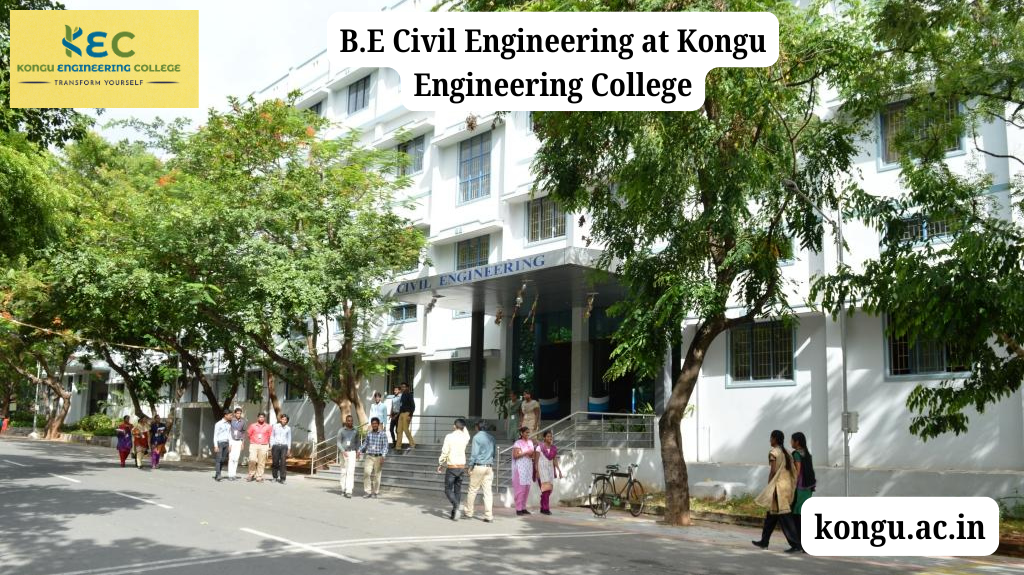
Civil engineering is essential for building roads, bridges, buildings, and public infrastructure. Civil Engineering at Kongu Engineering College provides students with strong technical knowledge and practical skills needed for real-world engineering challenges. The program emphasizes outcome-based education and prepares students for professional growth in the construction and infrastructure sectors.
Structured and student-friendly curriculum
The B.E Civil Engineering program follows Regulations 2020 and 2022 and spans eight semesters.
Courses are categorized into:
- Humanities and Sciences (HS)
- Basic Sciences (BS)
- Engineering Sciences (ES)
- Professional Core (PC)
- Professional and Open Electives (PE/OE)
This structure guides students from basic engineering concepts to advanced civil applications. First-year courses include mathematics, physics, chemistry, programming and communication skills. Later semesters focus on core civil engineering subjects such as surveying, structural analysis, construction materials, geotechnical engineering, transportation, and environmental engineering.
Practical learning and industry exposure
Civil Engineering at Kongu Engineering College emphasizes hands-on experience. Each semester includes laboratory sessions where students apply classroom knowledge.
Key labs include:
- Concrete and materials lab
- Soil mechanics lab
- Hydraulic engineering lab
- Structural engineering lab
Students also engage in professional skills training, mandatory two-week in-plant training, internships, and project work. These activities give real-world exposure and prepare students to confidently handle professional responsibilities.

Skills developed during the program
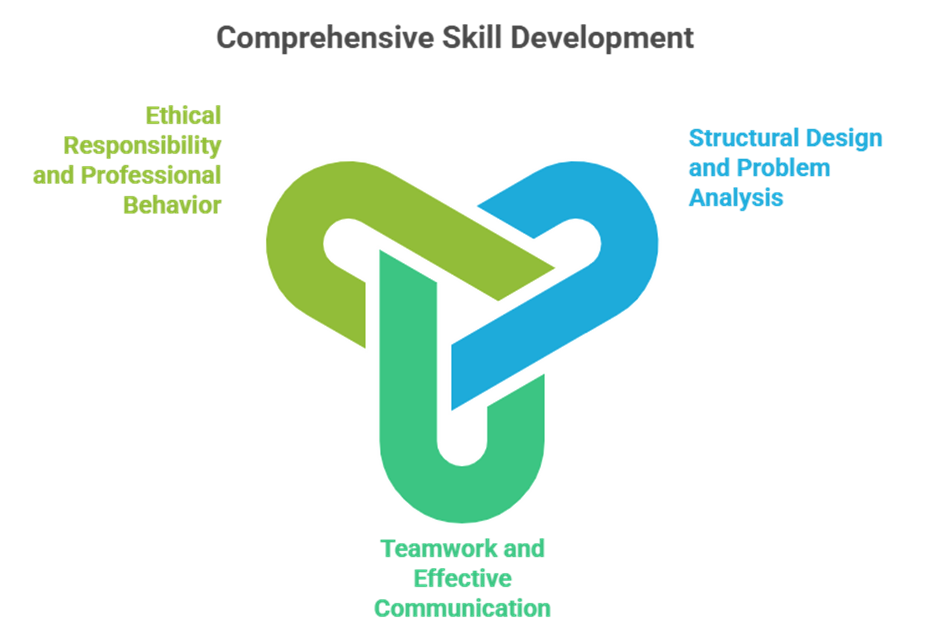
Graduates acquire a range of technical and professional skills including:
- Structural design and problem analysis
- Teamwork and effective communication
- Ethical responsibility and professional behavior
The department provides value-added training in AutoCAD, STAAD.Pro, ETABS, REVIT, and Primavera. These tools enhance employability and help students adapt to modern construction practices. Students also learn innovation, sustainability, and lifelong learning principles, essential for long-term success.
Career pathways and opportunities
Students completing Civil Engineering at Kongu Engineering College can pursue careers in construction companies, infrastructure firms, highway and transportation projects, consultancy services, and government departments. Options for higher studies, research, and competitive exams are also available.
The curriculum and practical exposure ensure graduates are industry-ready and capable of contributing effectively to engineering projects. This combination of theory, practice, professional training, and industry events sets students on a path toward a meaningful career in civil engineering.