At our institution, Research and Innovation at Kongu Engineering College form an integral part of academic life alongside teaching and learning. We maintain a structured research ecosystem that supports faculty members, research scholars, and students in carrying out research, development, and innovation activities within an organised academic framework.
All research activities function under documented institutional policies and approved academic committees. Through coordinated departmental processes, research work follows Anna University research regulations and institutional norms, ensuring academic discipline and consistency across programmes.
Research and Development Structure
Research activities at our college are coordinated through a central Research and Development Cell. This cell oversees all research programmes, including those registered under Anna University, and monitors progress across academic departments.
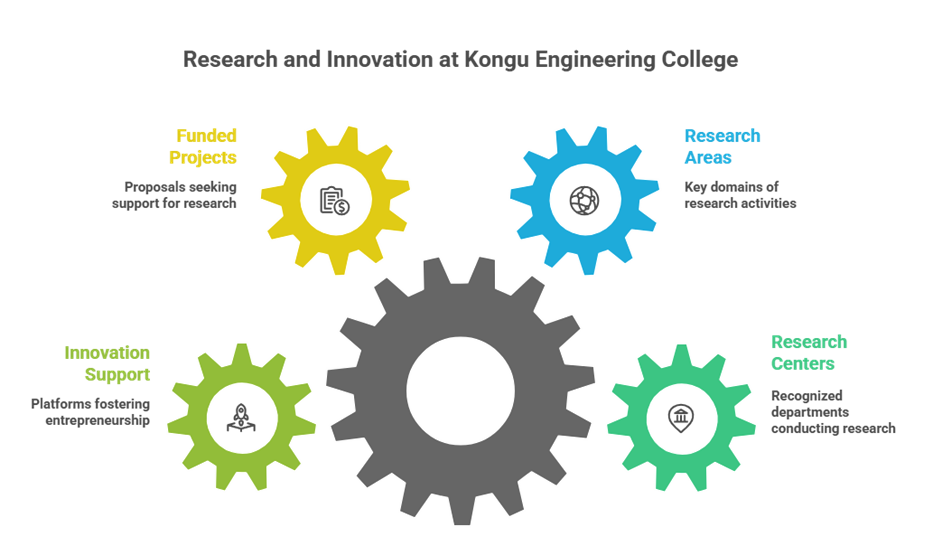
Our institution has 20 Anna University–approved research centres spanning engineering, emerging technologies, sciences, humanities, and management. These centres admit both full-time and part-time PhD scholars from within the institution as well as from external organisations.
Recognised research centres function in departments such as:
- Civil, Mechanical, Electrical and Electronics Engineering
- Electronics and Communication Engineering, Electronics and Instrumentation Engineering
- Computer Science and Engineering, Information Technology, Chemical Engineering
- Mechatronics Engineering and Food Technology
- Automobile Engineering, Artificial Intelligence and Data Science, Artificial Intelligence and Machine Learning
- Computer Science and Design, Computer Technology
- Mathematics, Physics, Chemistry, English, and Management Studies

Research Areas and Academic Contributions
Research and Innovation at Kongu Engineering College span a wide range of engineering and applied science domains. Key focus areas include:
- Artificial intelligence and data science
- Computer networks, cybersecurity, and embedded systems
- VLSI design and communication technologies
- Power systems, renewable energy, and energy studies
- Advanced materials, chemical and environmental engineering
- Food process technology and applied sciences
Our faculty members and research scholars contribute through journal publications, conference presentations, and participation in academic forums. Research activities and outcomes are documented through institutional research communications and annual reports.
Funded Projects and Intellectual Property Support
As part of Research and Innovation at Kongu Engineering College, our faculty members submit research proposals each year to national and institutional funding agencies. These proposals support:
- Research projects and infrastructure development
- Equipment procurement
- Workshops, seminars, and academic events
The Research and Development Cell supports intellectual property initiatives across departments. Patent filing, copyrights, and related IPR processes are encouraged as part of applied and technology-oriented research carried out by faculty members and students.
Innovation, Incubation, and Entrepreneurship
Our campus supports innovation through structured institutional platforms. The Technology Business Incubator provides incubation space, mentoring support, and shared facilities for technology-based start-ups.
Innovation initiatives are supported through:
- Innovation and Entrepreneurship Forum
- Institution Innovation Council
These platforms facilitate idea development, prototype activities, training programmes, and innovation-focused academic events within institutional guidelines.
Research Facilities and Laboratories
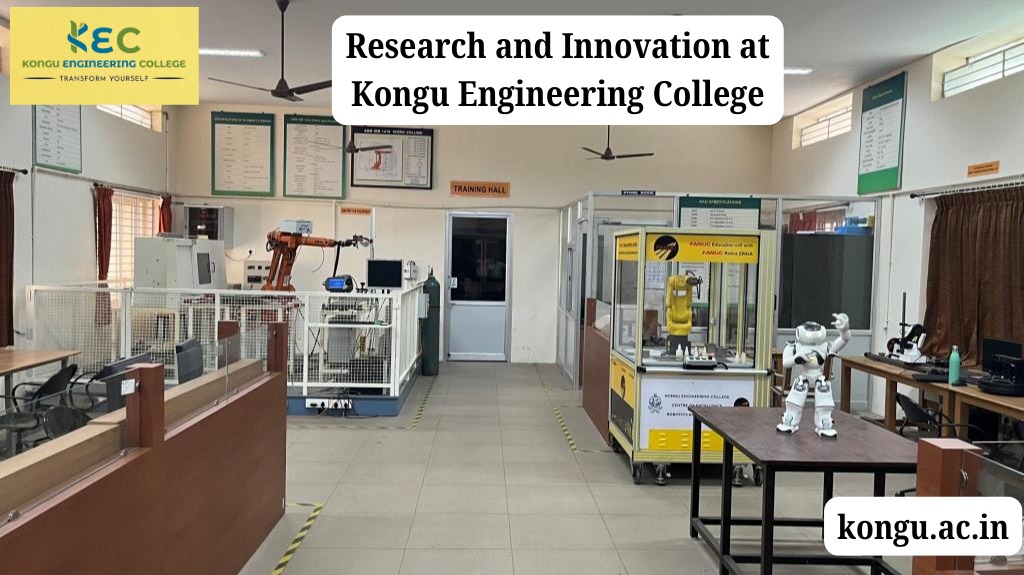
Research activities are supported through department-based laboratories, Centres of Excellence, and shared research facilities. Departments maintain specialised laboratories used for research projects, consultancy work, and industry-supported activities.
Centres of Excellence provide advanced infrastructure in areas such as robotics and automation, virtual and augmented reality, and energy studies. Centralised testing and consultancy facilities further support applied research and industry interaction.
Role of Research and Innovation in Academic Life Research and innovation play a continuous role in academic development at our college by integrating inquiry-based learning with structured academic processes. Through organised research centres, institutional policies, and dedicated support systems, we sustain a stable research environment that complements curriculum delivery and formal teaching